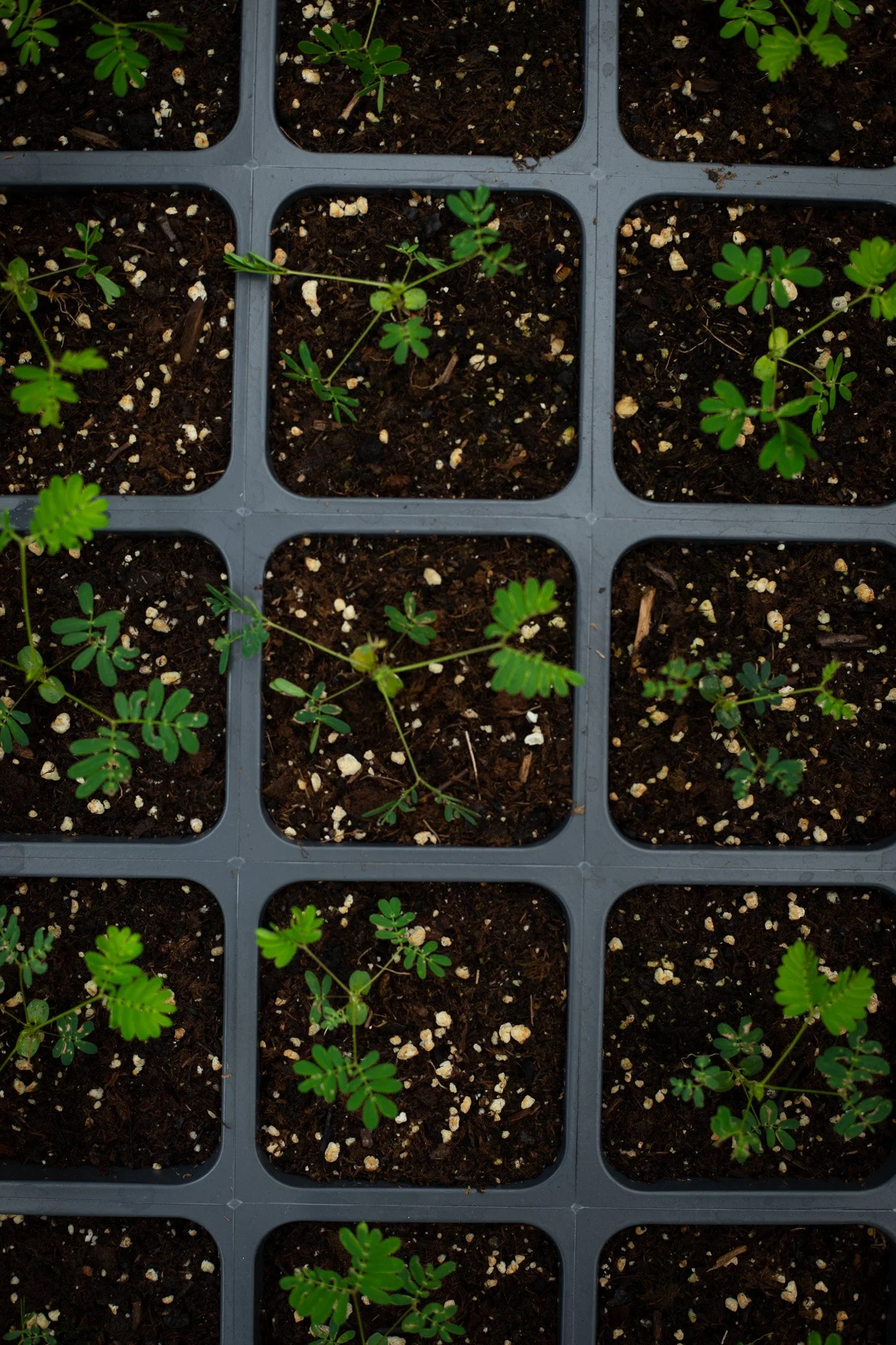
Mimosa pudica, also known as the sensitive plant, and a member of the Fabaceae family, is a tropical native of South and Central America. In its home range, it lives in year-round warmth, high humidity, and generous sun. Which means that here in Michigan, it's really more of a seasonal plant. It thrives through our spring and summer, puts on a whole show through midsummer when those fuzzy little pink pom-pom flowers appear, and then (like a lot of us) starts to lose enthusiasm as the days shorten and the indoor air dries out. Cold drafts from windows are a real threat in our winters, and the lower winter humidity our homes is a far cry from what this plant considers acceptable. So rather than fight that battle, lean into what it actually is: a warm-season conversation piece.
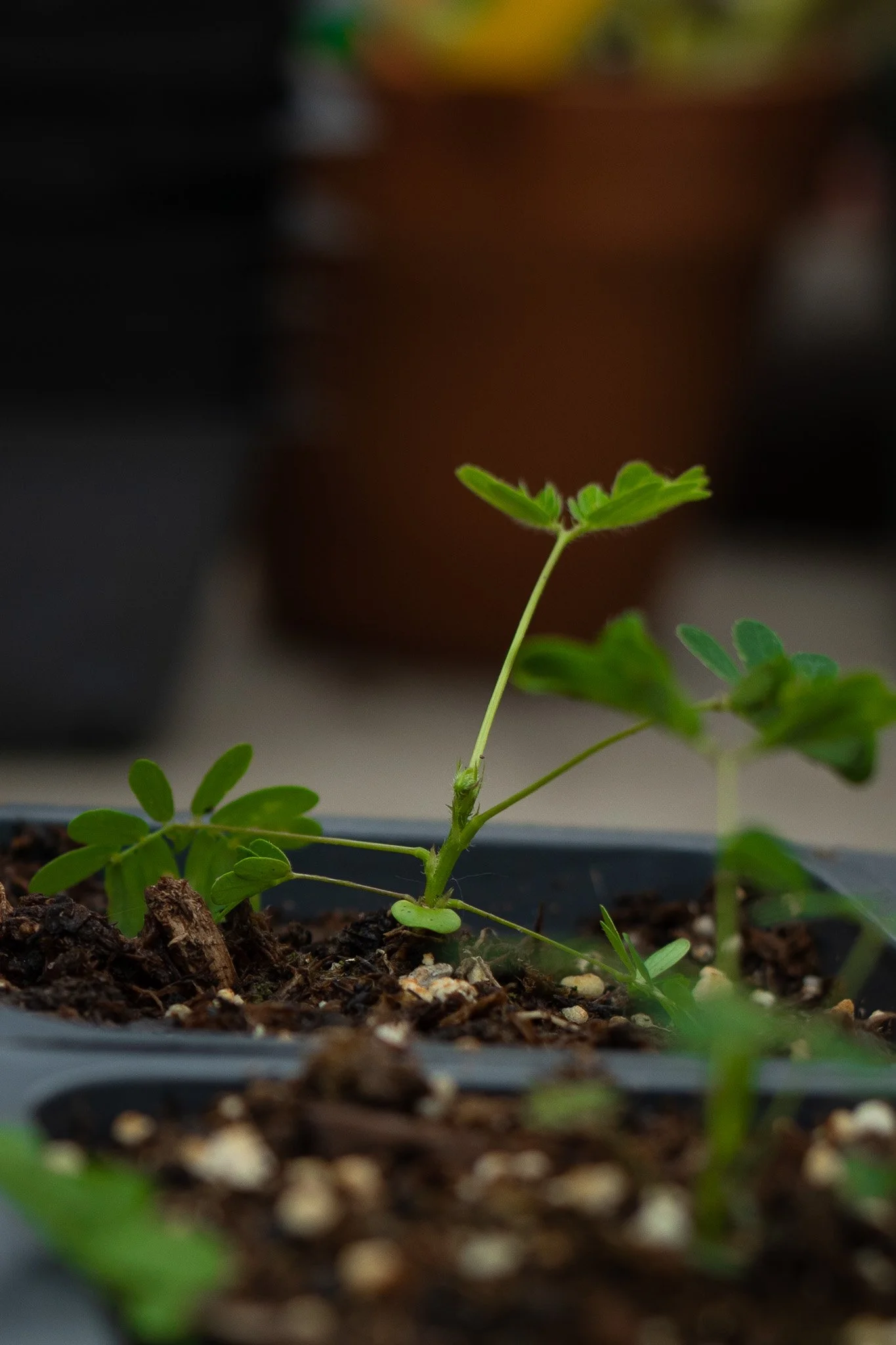
Light
Bright, indirect light near a north or east-facing window; too much direct sun can scorch the delicate leaves. If leaflets remain closed during the day, the plant isn't receiving enough light.
Water
Soil should be kept evenly moist at all times — check often and water as soon as the soil surface no longer feels damp.
Humidity
Prefers levels between 60–80%, reflecting its native tropical habitat. A pebble tray filled with water beneath the pot, grouping plants together, or a room humidifier all help. Avoid over-misting as it can encourage fungal issues.
Temperature
Prefers 65–75°F (18–24°C). Temperatures below 60°F should be avoided.
Soil
Well-draining potting mix. A terra cotta pot is good as it supports airflow and pairs well with a pebble tray setup.
Growth habit
It's an annual or short-lived perennial that doesn’t do well in Michigan winters—even indoors—so it's best to start fresh every year. By mid-to-late summer, the plant will likely be around one foot tall and bushy, with pale pink or purple pom-pom flower heads.
Pet Safety
Mimosa pudica is not listed on the ASPCA's toxic plant database for cats or dogs, and multiple university extension sources classify it as non-toxic. That said, the plant contains the compound mimosine, which has been associated with issues in livestock at large quantities—and as always, any plant material can cause mild GI upset if a pet decides to make a snack of it. We recommend keeping it out of reach of determined chewers.
Get Nerdy: Why does this plant fold when it’s touched?
Why do the leaves fold when they are touched? Folding your leaves is not a free behavior. It costs energy, and closed leaves don't photosynthesize well— and it has to reopen everything a few minutes later and do it all again the next time a breeze rolls through. That's a steep metabolic bill for something that doesn’t have an obvious purpose. So what's actually happening?
Let's start with the how, because it's genuinely cool. When a leaf is touched, the mechanical stimulus gets converted into an electrical signal (not unlike a nerve impulse) that travels through the plant tissue. That signal reaches specialized structures called pulvini, which are small, cushion-like motor organs sitting at the base of each leaflet and leaf stalk. When the signal arrives, cells in the lower part of the pulvinus expel potassium ions, reversing the osmotic gradient and drawing water out of those cells into the surrounding tissue. The pulvinus cells shrink, and the leaf folds. The whole cascade, touch to folded leaf, can happen in under a second. Then, over the next few minutes, the plant quietly pumps everything back and reopens.
Now for the why. There are a few competing theories. The leading one is herbivore deterrence. When a caterpillar or small insect lands on a leaf and it suddenly collapses and droops, one of two things happens: the bug falls off, or it finds itself standing on a thorny stem that was hidden under all that foliage a moment ago. The wilted, drooping appearance also makes the plant look dead or dying, and a seemingly lifeless plant is a lot less appetizing than a fresh, upright one. There's also a water conservation angle. Rapidly reducing leaf surface area can protect against water loss during intense heat or sudden temperature swings — a useful trick for a tropical plant that evolved under conditions where the sun or sudden heat can stress a plant quickly.