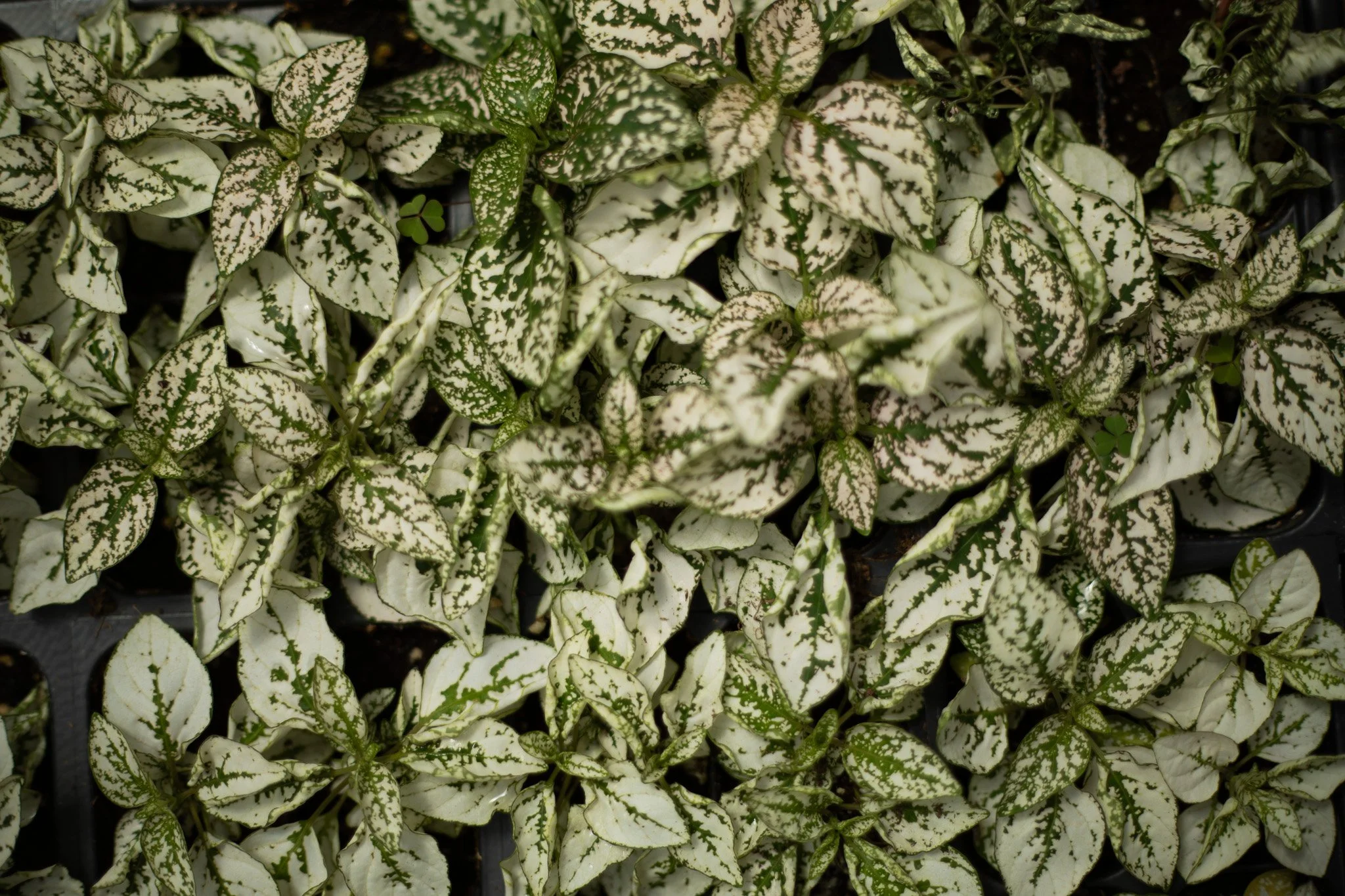
Hypoestes phyllostachya - Polka dot plant
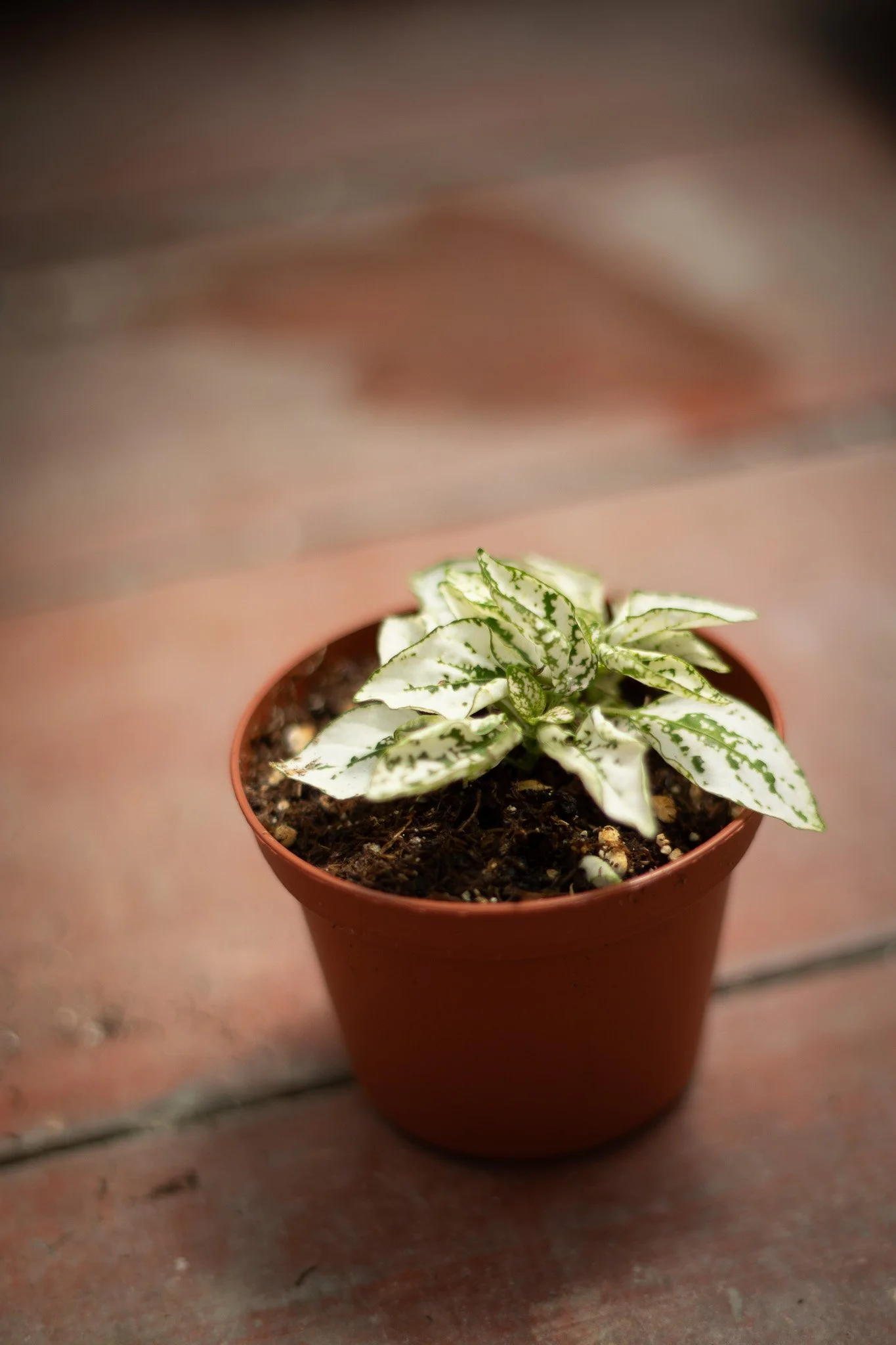
Every year around this time, you find yourself meandering through the greenhouse thinking: Does this go outside or inside? The best answer, it turns out, is often yes! There's a whole world of plants that genuinely thrive in both settings, and polka dot plant might be the most charming example. Porch pot now, houseplant later.
Light
Bright, indirect light applies whether this plant is on your porch or your windowsill. Outdoors, it does well in semi-shade, dappled sunlight, on a covered porch, or under a tree canopy. Indoors, a south- or west-facing window with filtered light works well. Hot, direct sun in any setting will curl the leaves and cause brown spots, while too little light causes the color to fade and the stems to get leggy. If your polka dot is losing its spots, it needs more light.
Watering
Keep the soil consistently and lightly moist — not soggy, not too dry. A wilted plant bounces back quickly once you water it, but yellowing leaves are a sign you've overwatered.
Outdoors/porch pot: Containers dry out faster in summer heat, so check more often during hot stretches.
Terrarium: Water much less frequently, as the enclosed environment retains moisture well, so overwatering is the main risk. Check the soil before adding more water.
Temperature
Outdoors: Wait until nighttime temps are consistently above 50°F before putting it outside, and bring it back in before the first frost. It transitions indoors well in fall.
Indoors/terrarium: Comfortable in the same range you are — 65–75°F. Keep it away from cold drafts and heating vents.
Soil and Containers
Use a light, well-draining potting mix. Make sure whatever container you're using has drainage holes, as this plant does not forgive soggy roots.
Pro Tips
Polka dot plant will eventually send up small flower spikes — usually in late summer or fall. They're not much to look at, and once the plant shifts into bloom mode, it tends to put less energy into those spectacular leaves. Pinch the flowers off as soon as they appear to keep the foliage show going strong. And don't toss those pinched stems — polka dot plant roots easily in a glass of water, making it one of the easiest plants to propagate and share. Stick a few cuttings in a jar on your windowsill and you'll have new plants ready to pot up in no time. And if you use it in a Terrarium,Polka dot plant can outgrow its neighbors if left unchecked, so trim it back regularly to keep it to the proper scale.
Pet Safety
Hypoestes phyllostachya is listed as non-toxic to cats and dogs by the ASPCA. That said, ingestion can cause mild vomiting or digestive upset, so it's still worth discouraging snacking.
Get Nerdy with Cara: Are they really polka dots?
When you look at a polka dot plant, your brain sees spots on a green leaf. But what those spots actually are depends entirely on which variety you're looking at, and the difference is more interesting than you might expect.
Most polka dot plants get their color from anthocyanins, which are pigments that layer on top of existing chlorophyll rather than replacing it. The pink and red spots are anthocyanin deposits concentrated in epidermal cells, sitting right over green tissue that's still fully functional and photosynthesizing away underneath. The green is still there. The spots are an addition, not a subtraction. This also means those pigments are doing double duty: anthocyanins help protect leaf tissue from excessive light, temperature fluctuations, and other environmental stresses.
The white variety, which is what we have in the greenhouse right now, works a little differently. White polka dot plants have small green leaves marked with white spotting where the tissue has reduced or absent chlorophyll. Those white areas contribute less to photosynthesis than the green ones, which is why the white variety does best in bright, indirect light. And why it fades faster in dim spaces than the pink or red types.
And if you've noticed a faint blush of pink on our white variety, you're not imagining it. The white cultivar has a lower (but still present) anthocyanin capacity, and under the right light conditions it'll show just a hint of pink.
Here's the fun part: both versions are doing something completely different than the chimeric variegates that are dominating houseplant social media right now. A chimeric plant like Monstera albo contains two genetically distinct tissue populations in its meristem — cells that produce chlorophyll and cells that don't. And because those populations are always competing, reversion to solid green is more likely. Polka dot plant, by contrast, has a single stable genome, so its pattern is genetically programmed across every cell. Light doesn't create new variegation; it just helps the existing genetic pattern express more clearly. Give it enough light, and the spots show up boldly. Leave it in a dark corner, and they'll become less noticeable. But the instructions were never lost, so if you move it back to better light, they'll come back.