
Peperomia incana
Felted Peperomia
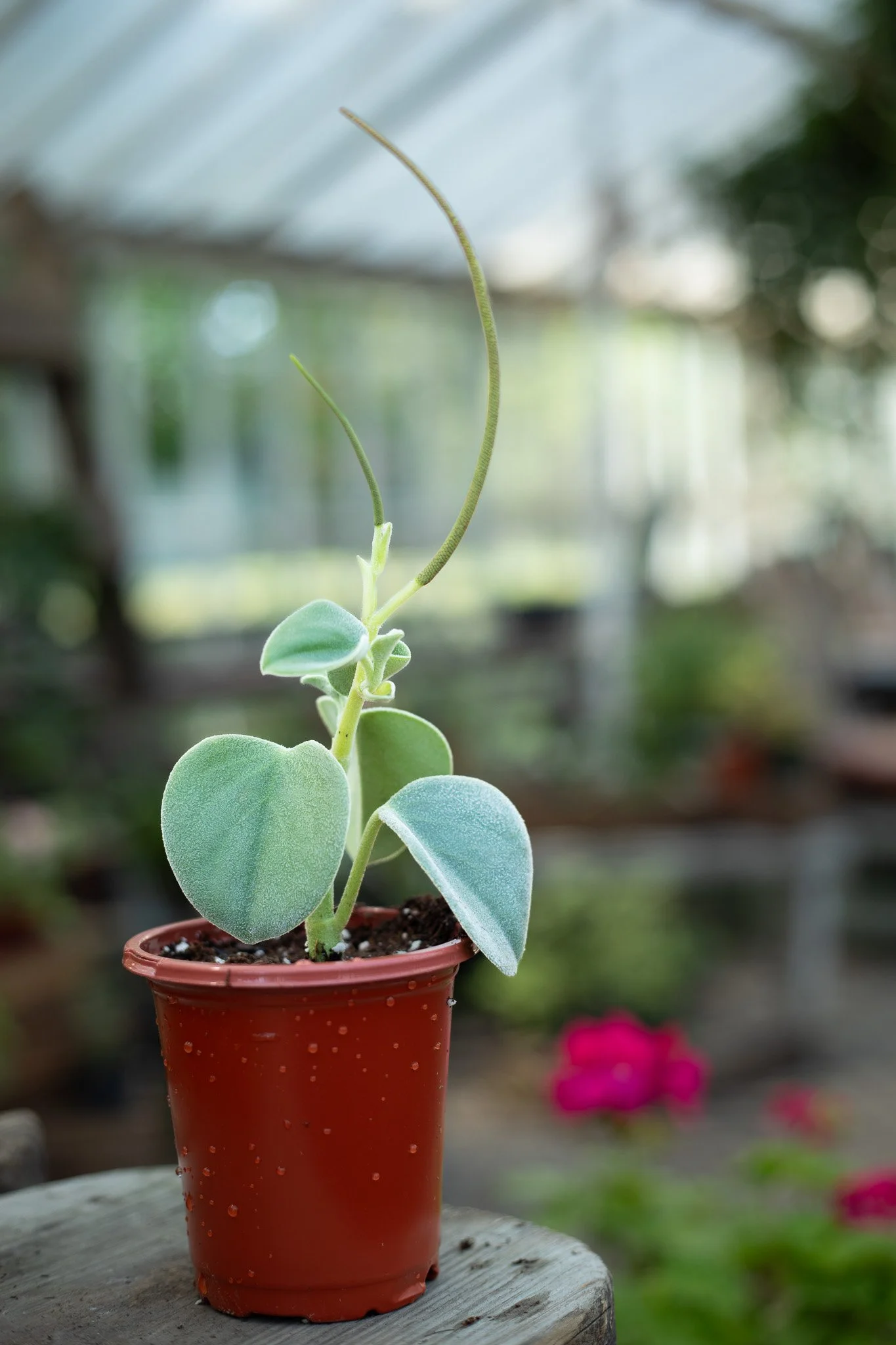
Peperomia incana is a favorite around the greenhouse. It's thick, heart-shaped leaves covered in a soft, velvety layer of silvery hairs are so perfect they almost don’t look real.
Light
Bright, indirect light is ideal, though this variety can tolerate lower light.
Water
Water thoroughly until water drains from the bottom of the pot, then don't water again until the top 2 inches of soil are dry. It's important to protect this plant from overwatering. This variety is very succulent, and it wants to be treated like that when you water it.
Soil
A well-draining potting soil works best, as these guys do not tolerate overwatering.
Pro-tip
This plant would be happy in a clay pot (to help avoid overwatering). You can also propagate it via stem or leaf cuttings. Take 2–3 inch cuttings, remove lower leaves, and plant directly in soil. ots
Pet Safety
The genus Peperomia is consistently listed by the ASPCA as non-toxic to dogs and cats.
Get Nerdy with Cara: The Science of the Fuzz
Peperomia incana isn’t just a favorite of ours — it has been in cultivation at Kew Gardens in London since at least 1815!
Those silvery-white hairs covering the leaves aren't decorative. They're trichomes, which are microscopic outgrowths from the plant's epidermal cells.
The dense, pale fuzz reflects and scatters incoming UV radiation before it can damage the photosynthetic tissue underneath. The white coloration isn't accidental; it actively reflects light, which keeps the leaf surface cooler and reduces the amount of water the plant needs. The trichomes also trap humidity by creating a thin layer of still air right against the leaf surface, slowing the rate of water loss through transpiration. They are also a pest deterrent. The texture makes the leaves difficult to navigate and unpleasant to eat. Studies have found that dense trichome coverage can reduce herbivore damage by up to 40%.