Devil’s backbone: Euphorbia tithymaloides
Euphorbia tithymaloides ssp. smallii 'Variegatus'
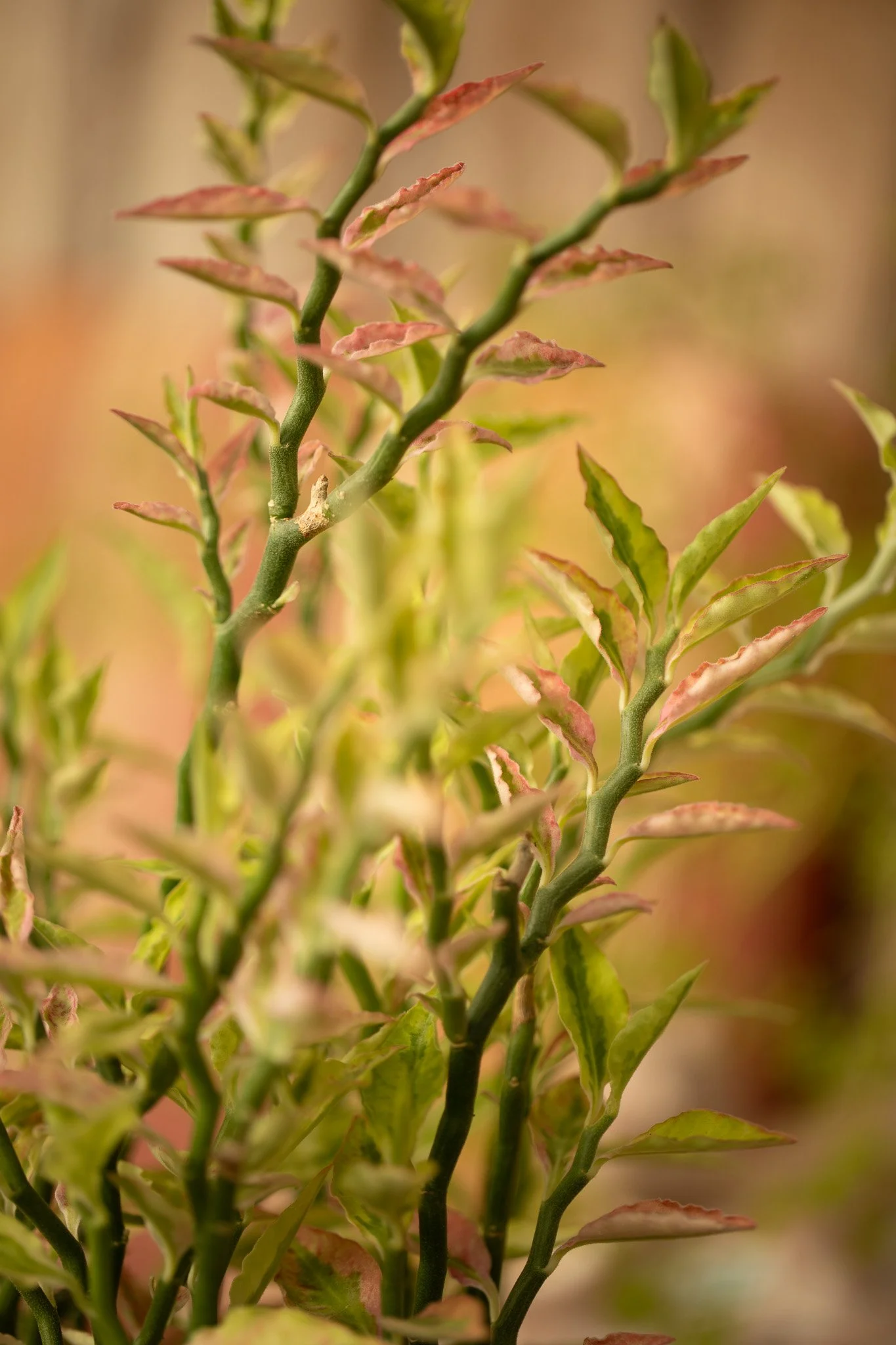
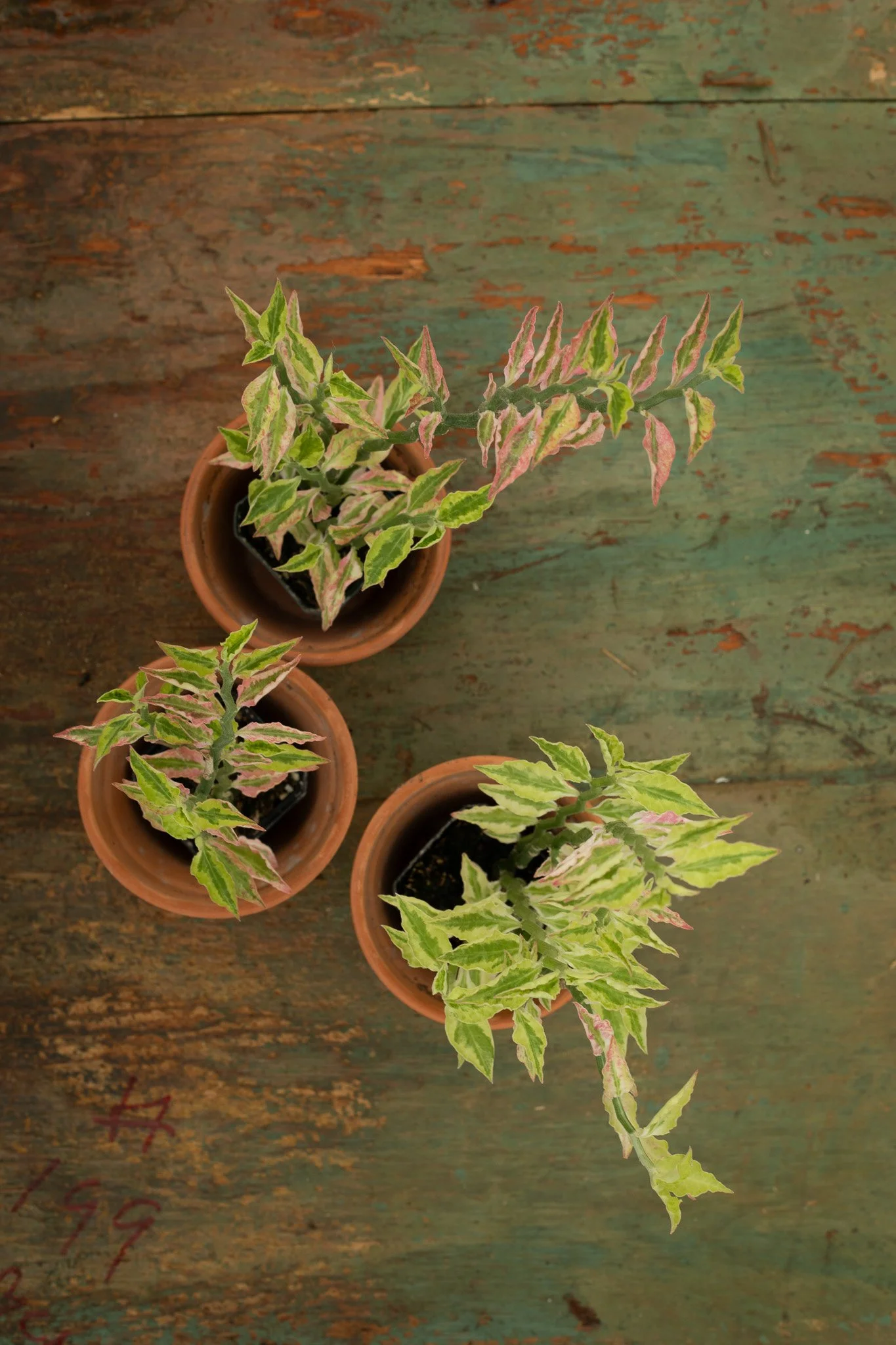
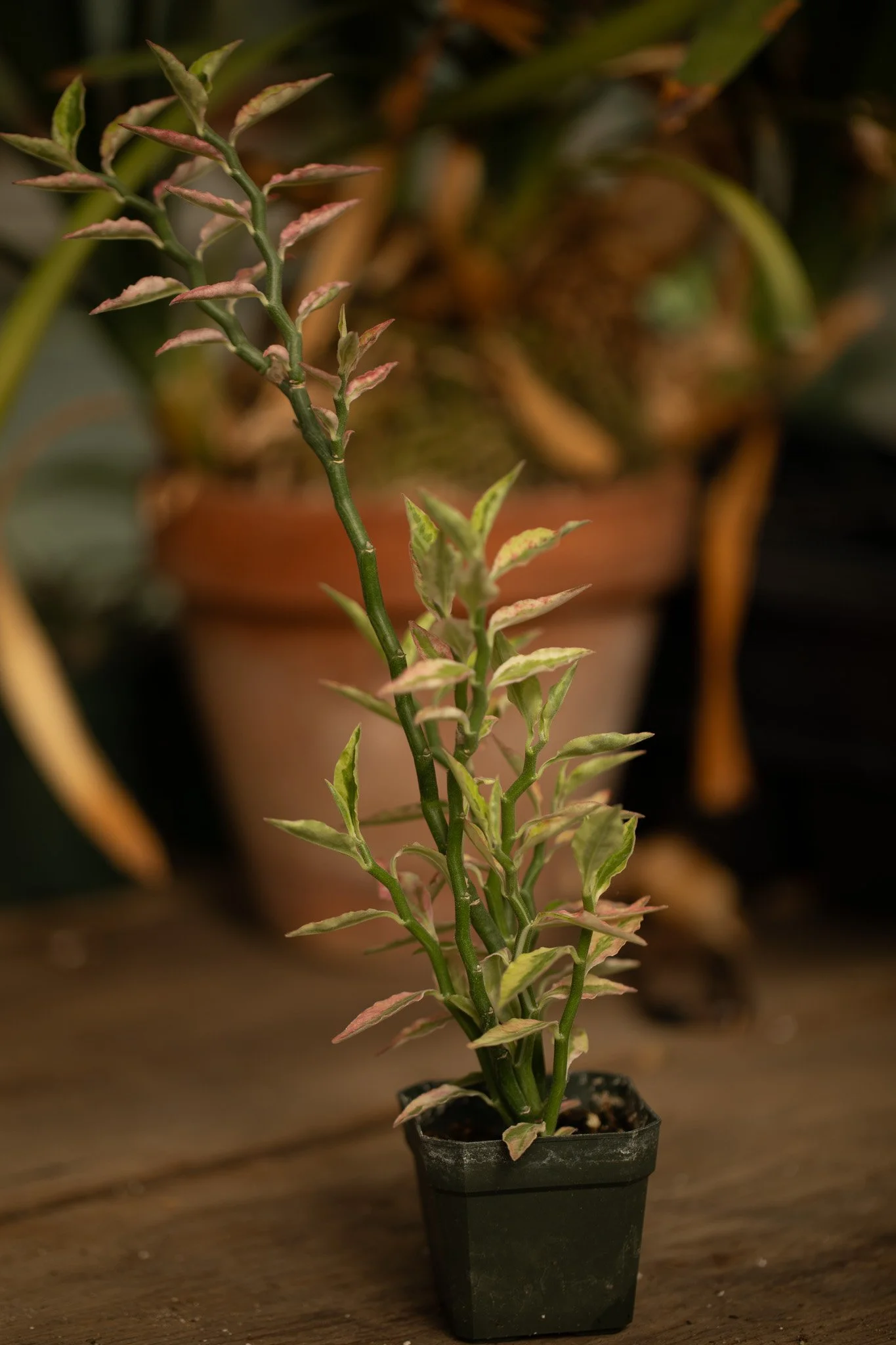
This is probably one of the neatest looking plants in the greenhouse. The stems zigzag back and forth at each leaf node, and on this cultivar the leaves have cream-to-pale-yellow variegation with flushes of pink and red, especially when the plant is stressed by cooler temps or bright light. It's a member of the spurge family, which has milky latex sap you need to be careful with (don’t get it in your eyes).
Light
Bright, indirect light a few feet back from a south- or west-facing window is great. It'll tolerate a little direct morning sun, but hot afternoon rays can scorch those variegated leaves. Too little light and the zigzag pattern relaxes into something much less interesting as the plant stretches for the sun and loses its signature kink.
Water
Let the soil dry out most of the way between waterings. This plant stores water in its stems, so it's genuinely forgiving if you forget it for a week. What it won't forgive is sitting wet. Squishy or translucent stems are your sign you've overdone it.
Soil
A well-draining cactus/succulent mix, or a regular potting mix cut with perlite or coarse sand. Drainage holes are non-negotiable here. This one is much more likely to die from wet feet than from neglect.
Pro Tip
When you repot or take cuttings, let that latex sap dry and callus over on any fresh cuts before you handle the plant further or bury a cutting in soil — it helps prevent rot and keeps the sap from irritating your skin. Gloves aren't a bad idea either.
Pet Safety
The ASPCA lists Euphorbia as toxic to both cats and dogs. The milky latex sap is the culprit, and it can irritate the mouth, skin, and eyes and cause vomiting or drooling if chewed or ingested. Keep this one out of reach of curious pets.
Get Nerdy with Cara:
What looks like a single red or burgundy bloom at the stem tips is actually a cluster of many tiny flowers working together, called a cyathium. Euphorbia fuses small bracts into a shoe-shaped cup—and tucked inside that cup are one female flower and a ring of stripped-down male flowers. So they don’t actually have petals of their own, just bare reproductive parts. So the "flower" you're admiring is really a whole flower cluster in disguise as one bloom, a trick found only in this genus of over 2,000 species, from towering succulent trees to poinsettias.