
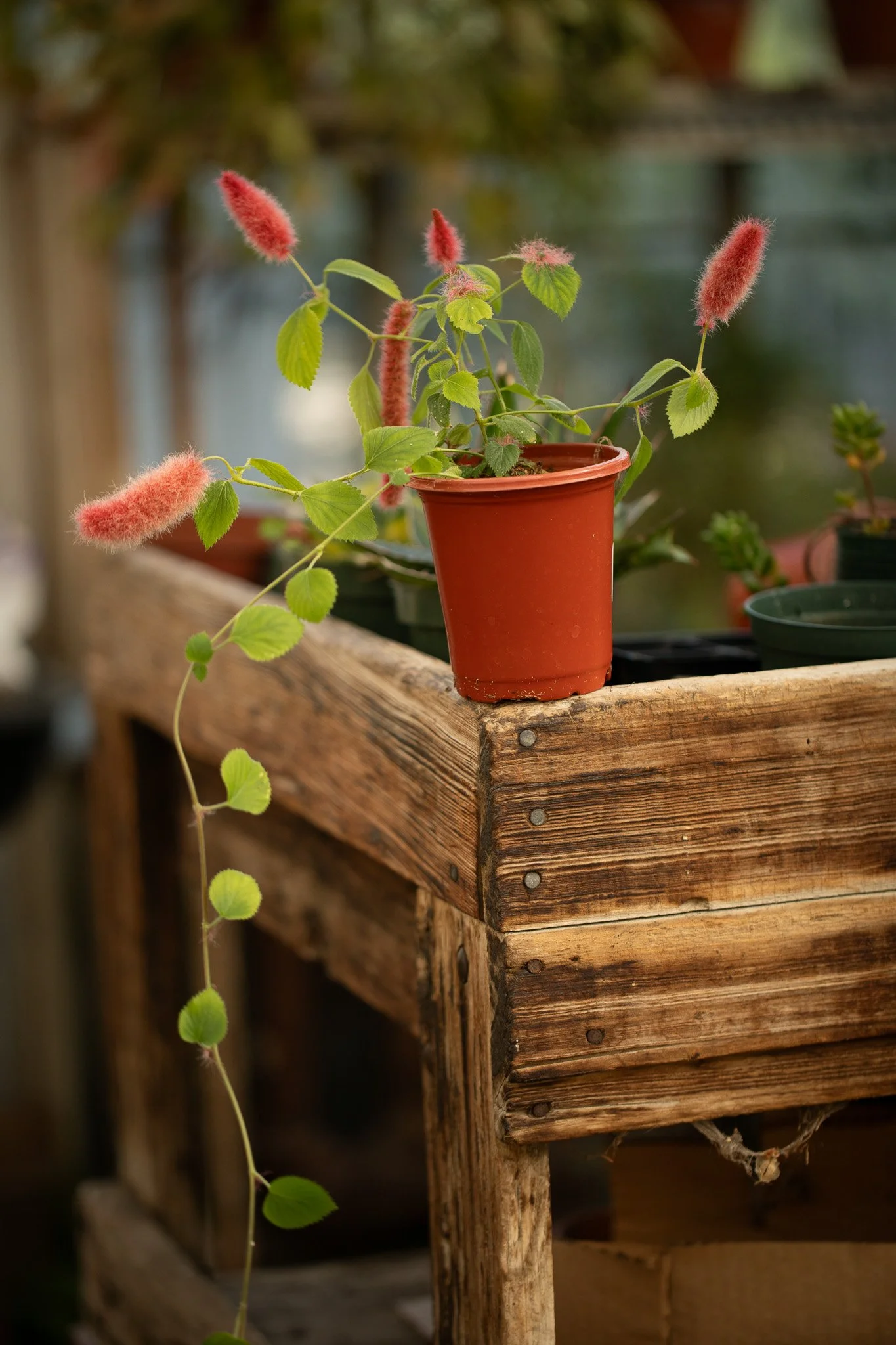
Acalypha hispida — Chenille Plant
The plant you want to pet. The fuzzy catkins are too cute to walk past:)
Light
Bright, indirect light. It can take a little direct morning sun, but shield it from hot afternoon rays, which will scorch those big, soft leaves.
Water
Keep the soil evenly moist — this one doesn't like to dry out completely. Let the top inch or so dry between waterings, then water thoroughly. Ease off in fall and winter as growth slows.
Soil
Use a well-draining mix that still holds some moisture. It wants to stay evenly damp, not swampy, so drainage really matters; a pot without drainage holes is asking for root rot given how much this plant wants to drink.
Pro Tip
Pinch or prune the growing tips regularly, especially on young plants. Chenille plant can get leggy fast, and it blooms on new growth, so a light trim after a flush of flowers fade encourages branching and keeps the catkins coming rather than putting all its energy into one tall, sparse stem.
Temperature & Humidity
High — aim for 50–60%+. This is a rainforest plant at heart, so dry indoor air will show up fast as crispy leaf edges and dropped leaves. A pebble tray or humidifier goes a long way. Warm, 65–85°F. It won't tolerate anything near freezing, and growth stalls below 60°F.
Pet Safety
According to the ASPCA (listed under "Foxtail," one of the plant's common names), the chenille plant is toxic to dogs and cats. Ingestion can cause drooling, vomiting, and diarrhea.
Get Nerdy
Here's a fun one! Those fuzzy red "tails" aren't flowers with petals at all. Botanically, they have no petals, no calyx, nothing — just dense clusters of tiny reduced female flowers packed along a spike. What you're admiring is really the absence of typical flower parts, dressed up in color and texture instead. And here's the twist: chenille plant is dioecious, meaning male and female flowers grow on separate plants, but almost every chenille plant sold commercially is female, because the male flowers are small and unshowy. That means the plant most of us grow essentially never sets seed. Every chenille plant in cultivation is propagated from cuttings, generation after generation!