
Peperomia scandens: Cupid Peperomia
In the wild, it climbs trees in the tropical forests of Mexico, Central America, and South America — but in your living room, it's happy just spilling out of a hanging basket.
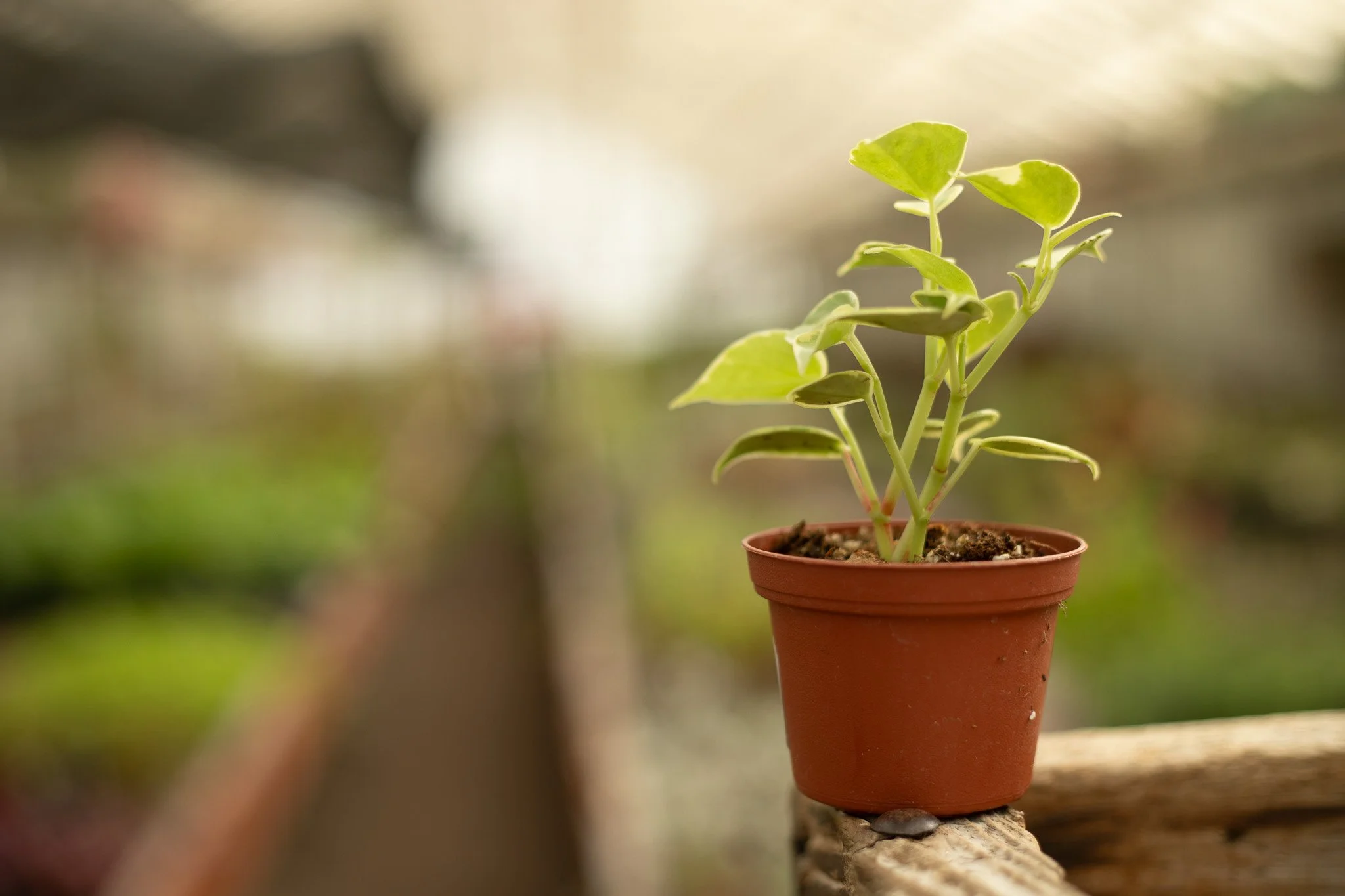
Light
Bright, indirect light is best. An east- or north-facing window works well. It will tolerate lower light too, though growth slows and variegated leaves will lose some contrast.
Water
Let the top inch or two of soil dry out between waterings. Like a lot of Peperomias, scandens stores water in its succulent leaves and stems (more on that below), so it's genuinely forgiving if you forget a week. What it won't forgive is soggy soil — overwatering is the fastest way to root rot.
Soil
A well-draining mix is essential, and a pot with drainage holes is non-negotiable given how easily this one can develop root rot in wet feet.
Pet Safety
The ASPCA doesn't have a listing specifically for Peperomia scandens, but every Peperomia species they have evaluated — including close relatives like baby rubber plant and emerald ripple peperomia comes back non-toxic to cats and dogs. So while we can't point to an official scandens-specific entry, the genus's track record is reassuring.
Get Nerdy
If you ever catch your Cupid Peperomia flowering, look closely at those thin spikes; you won't find a single petal or sepal anywhere on them. Each individual flower is stripped down to the bare essentials: a bract, a couple of stamens, one pistil.
This isn't unique to P. scandens, it's a family trait. Peperomia belongs to a small group of plants (alongside its relative Piper, the genus that gives us black pepper, and the lizard's-tail family) that botanists call "perianthless," meaning they lost their petals and sepals entirely at some point in their evolutionary history. And here's the interesting part — nobody's fully cracked why. Researchers studying flower development in these plants have found that the loss happens differently across different species. Some retain a trace of the structure that would've become a petal, and others don't, suggesting it's not one clean evolutionary event but something that happened piecemeal, plant by plant, for reasons still being worked out.
So next time your Peperomia sends up one of those unassuming little spikes, you're looking at a flower that's already abandoned most of what we think of as a flower, and evolutionary biologists are still trying to figure out exactly how it got there.