
Begonia listada - Striped Begonia
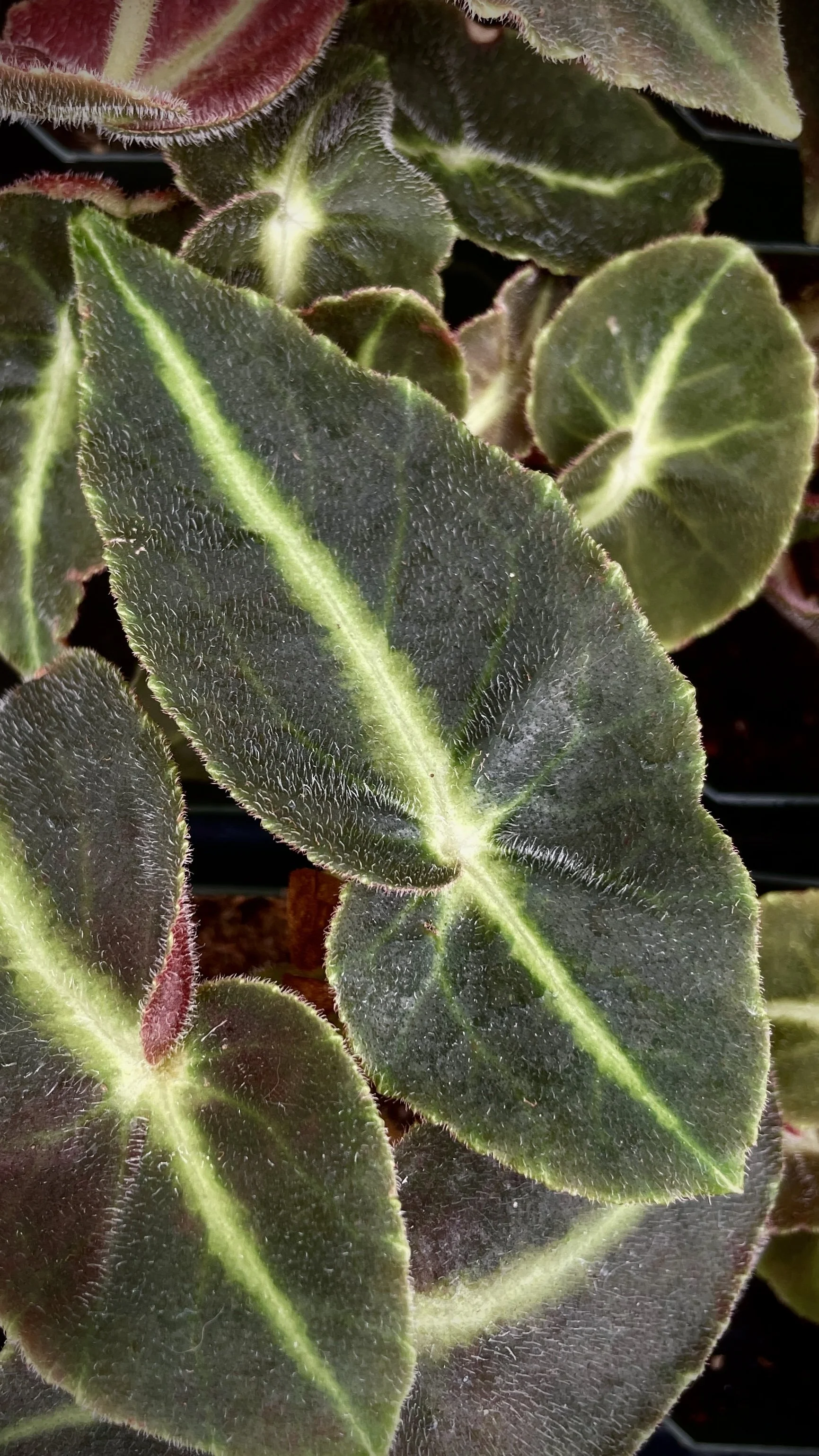
Begonia listada is a compact Brazilian native that grows into little mound with velvety dark green leaves split down the center by a bright, almost luminous stripe. When you flip a leaf over and you'll find a beautiful purple-red underside.
Light
Bright, indirect light is best. An east-facing window works beautifully — a south or west window is fine if you soften it with a sheer curtain or keep the plant a few feet back from the glass. Direct sun will scorch those velvety leaves fast, but too little light will mute the stripe and leave you with leggy growth.
Water
Keep the soil evenly moist but never soggy. Let the top inch dry out before you water again. Try to keep water off the leaves themselves; wet foliage on a begonia is basically an invitation for powdery mildew.
Soil
A well-draining soil mix is important. A standard potting soil with perlite gives roots the drainage they need without drying out completely between waterings.
Pro tip
This begonia likes humidity. A pebble tray or a spot near your more tropical plants will do the trick without any special equipment.
Pet safety
The ASPCA lists begonias (Begonia spp.) as toxic to dogs, cats, and horses. The plant contains calcium oxalates that cause drooling and vomiting if chewed, and the tubers and roots carry the highest concentration. Keep this one out of reach of chewers.
Get Nerdy
So this is cool: that bright stripe running down the center of the leaf isn't actually a pigment. Botanists who've studied leaf structure in shade-loving begonias found that the pale areas aren't missing chlorophyll. The cells there are just as loaded with functioning chloroplasts as the dark green parts. What's actually happening is that a thin pocket of air forms just beneath the leaf's outer surface, right above the layer where photosynthesis happens. Light hits that air pocket and bounces back out instead of passing through, the same way light scatters off frost on a window. Your eye reads that scattered light as a lighter color, even though the plant underneath is working exactly as hard as the dark green tissue next to it.
The interesting payoff: researchers measured photosynthetic efficiency in the pale zones versus the green zones and found basically no difference. Most variegated plants are trading some solar income for the flashy look (that's why heavily variegated cuttings are often slower growers). But this genus gets the pattern without the loss!