
Philodendron micans
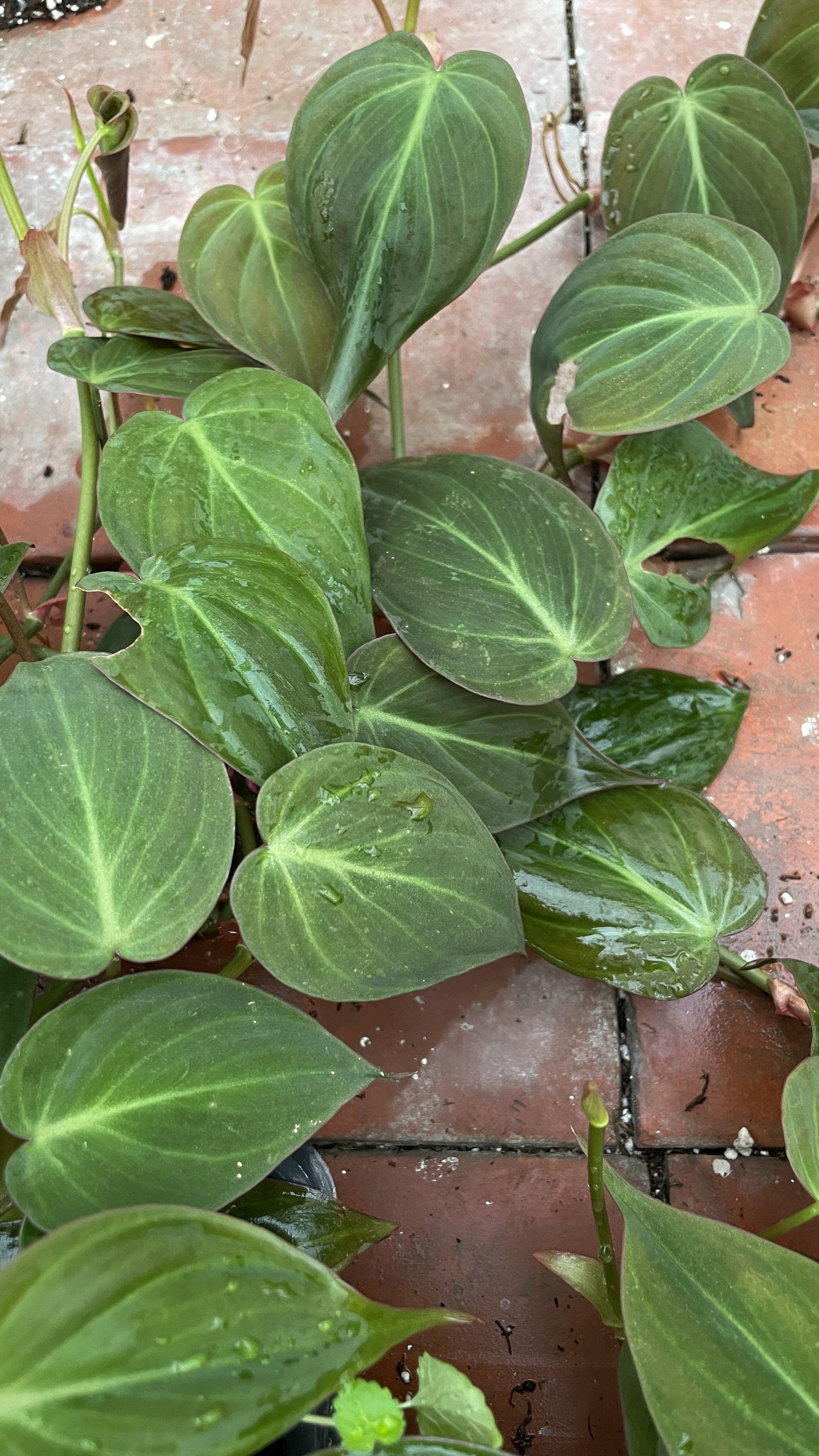
If you’ve had your eye on this velvety beauty, Philodendron micans is available in the greenhouse this week. The heart-shaped leaves have a soft, almost fuzzy texture you can't help but touch, and they shift color depending on the light. It changes from deep green with a coppery, iridescent sheen to bronzy-purple. It trails more than climbs, so it looks fantastic spilling out of a hanging basket or draping off a high shelf. And P. micans is genuinely low-maintenance.
Light
Bright, indirect light is best. A few feet back from an east- or west-facing window. Direct sun will scorch those velvety leaves, but too little light will fade the color and leave you with a leggy, sparse vine.
Water
Let the top 1–2 inches of soil dry out between waterings. Err on the side of underwatering.
Soil
A well-draining aroid mix (a bit of extra pearlite is good) keeps the roots happy and oxygenated.
Pro tip
That signature velvet sheen is strongest in good light, so if your P. micans starts looking a little flat or dull, it's often asking for more (indirect!) brightness rather than more water.
Pet safety
According to the ASPCA, philodendrons contain insoluble calcium oxalates, and so they are toxic to dogs and cats if chewed or ingested.
Get Nerdy with Cara
That velvety shimmer on a Philodendron micans leaf isn't a coating or a trick of the light bouncing off fuzzy hairs. It's actual structural color, and it works almost exactly like a butterfly wing. Rather than using pigment to absorb and reflect certain wavelengths (like chlorophyll does with green), P. micans leaves have specialized layers in their epidermal cells that physically bend and interfere with light as it passes through. Depending on the angle you're viewing from, that interference shifts which wavelengths reach your eye, which is why the same leaf can look bronze one second and deep green the next as you move around it.
And the really cool part is that this isn't just decorative. Plant scientists have found that in shade-loving species, these iridescent, light-bending cell layers can actually help the plant harvest light more efficiently in low-light environments.