
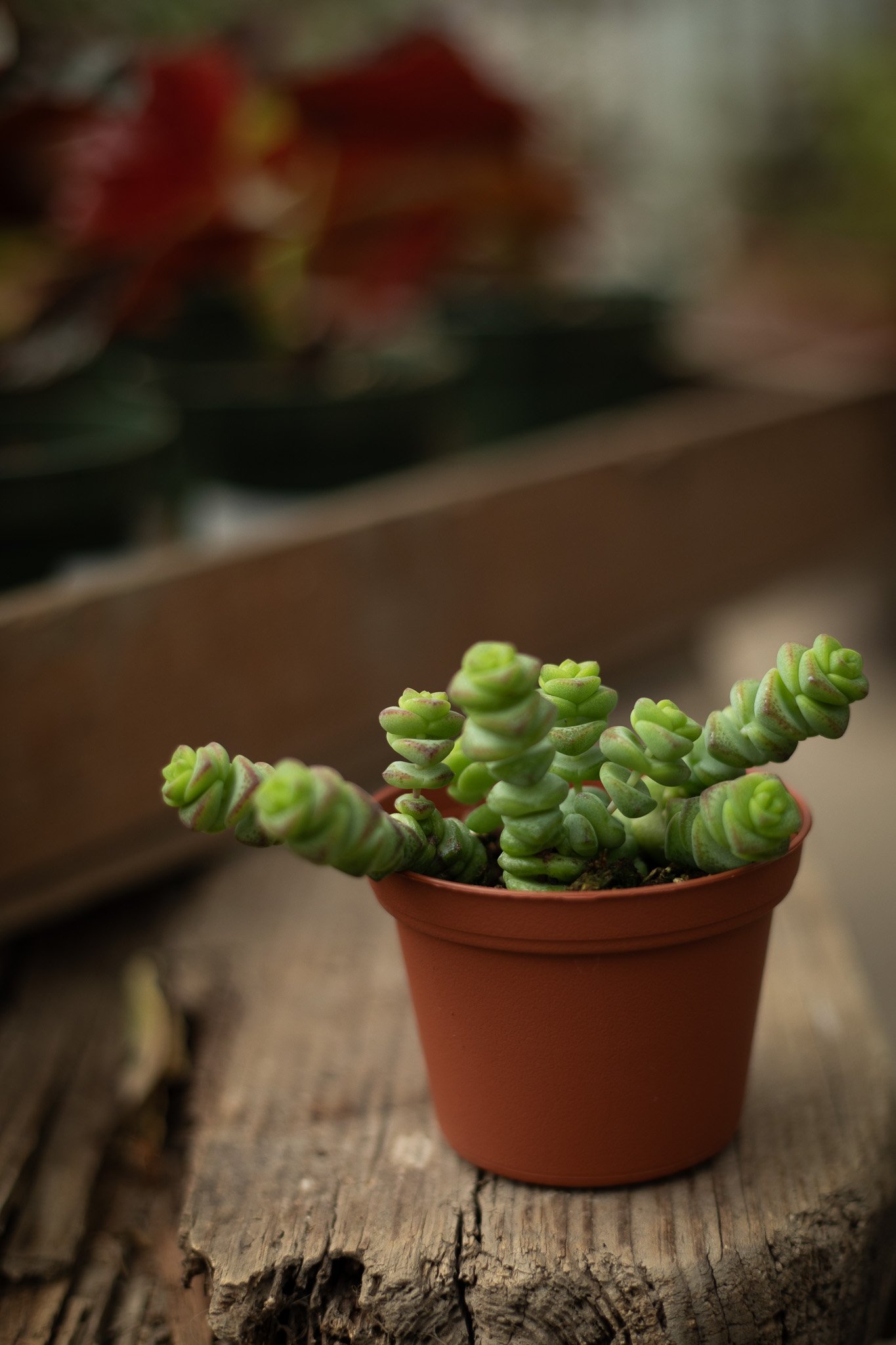
Crassula sp. (baby’s necklace)
The stacked, spiraling leaves really do look like someone strung tiny beads along every stem. Native to the rocky cliffs of South Africa, this plant thrives on a little neglect.
Light
Bright and direct is good for this one. A south-facing window is ideal, and more sun = more intense pink coloring on the edges.
Water Less is more. The soak-and-dry method works best: water thoroughly until it drains from the bottom, then let the soil dry out completely before watering again. These plants are very sensitive to wet soil, so when in doubt, wait another day.
Soil Choose a potting mix that drains very well and doesn't retain much moisture. Cactus soil with a few handfuls of perlite mixed in does the trick.
Pro Tip The plant grows upright at first, then sprawls and spills over the edge of the pot as it matures, so give it a little room to do its thing, or add it to a hanging basket.
Pet SafetyCrassula rupestris is not listed as toxic to cats or dogs by the ASPCA. It's generally considered non-toxic and safe to grow around pets and children. That said, there isn't extensive research on this specific species, so we'd still recommend keeping curious chewers at a distance.
Get Nerdy with Cara
You know what I love about Baby's Necklace? The thing that makes it look like a necklace is doing actual structural work, and the thing that makes it pretty is technically a stress response.
The leaves don't just happen to stack that way. In the Crassulaceae family, successive pairs of leaves are rotated 90 degrees from the pair below — a pattern called decussate phyllotaxis (say that three times fast!). So every leaf pair crosses the last one at a right angle, spiraling up the stem in a tight, geometric sequence. Essentially, each new pair makes the most efficient use of the available space. The result just happens to look like someone threaded beads by hand.
Those deep pink edges aren't just decorative, they're the plant's version of sunscreen. When a succulent experiences environmental stress, such as intense light or low temperatures, it produces a pigment called anthocyanin as a self-defense mechanism. Anthocyanin protects the plant's leaves from UV damage, so more sun exposure equals more anthocyanin and more color. If you move Baby's Necklace to a dimmer spot, the red fades back toward green.