
Tradescantia sp.
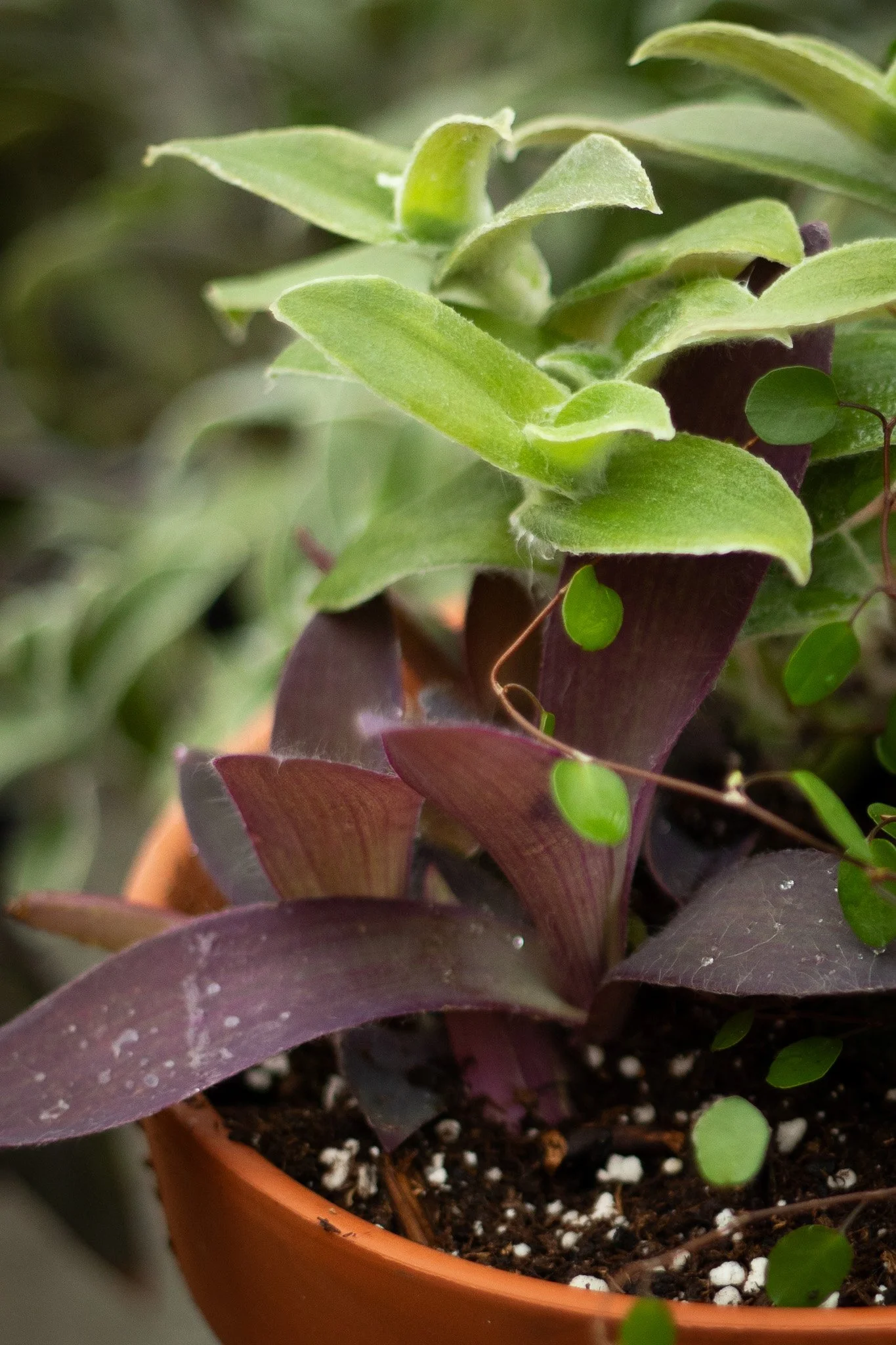
As a houseplant, Tradescantia earns its place on any shelf or hanging basket it can trail from. It grows fast, propagates almost embarrassingly easily (stem cuttings in water will root in days), and comes in enough varieties to suit any aesthetic. Once temps stay reliably above 50°F, it's also ready to head outside as a spiller in mixed porch pots, where it thrives in morning sun with afternoon shade and comes back indoors without complaint when September arrives. Few plants pull off the indoor-outdoor double act this gracefully.
Light
Bright indirect light . More light = more vivid color, which is especially true for variegated types. They can tolerate some gentle direct morning sun but not harsh afternoon sun.
Water
Water when the top 1–2 inches of soil are dry. They like moisture but absolutely not soggy .
Soil
Well-draining potting mix; standard houseplant mix plus perlite works well.
Humidity
They like it!
Pro-tip
Regular pinching keeps them bushy. Stem cuttings root in water in as little as a few days — truly one of the easiest propagators in the houseplant world.
Pet Safety
The ASPCA lists Tradescantia fluminensis (Inch Plant) as toxic to dogs, cats, and horses, with clinical signs of dermatitis. The sap contains compounds that can cause skin irritation on contact. That said, symptoms are reported to to be mild.
Get Nerdy with Cara
Here's something I did not expect to learn this week:
Tradescantia has been used in research labs since the mid-20th century as a living detector for radiation and environmental pollution. Not metaphorically, but actually. Scientists grow specific hybrid clones of Tradescantia that are bred to be heterozygous for flower color, meaning they carry both the gene for blue stamen hairs (dominant) and the gene for pink (recessive). Under normal conditions, the hairs are blue. But when the plant is exposed to ionizing radiation or certain chemical mutagens, something happens at the cellular level. The dominant gene gets disrupted, the recessive pink shows through, and individual cells in those tiny stamen hairs turn pink. Researchers can literally count the pink cells under a microscope and use that number to calculate mutagen exposure. So cool.
It's a bioassay (a biological measurement system), and it's sensitive enough to detect radiation at levels relevant to everyday human exposure. Scientists have set up Tradescantia monitoring stations in cities to track air pollution and soil contamination. They put pots of plants near industrial sites, highways, and diesel-contaminated ground, then periodically examine the stamen hairs for mutation frequency.
The reason Tradescantia is so useful for this is the same reason it is also loved in introductory botany labs: the stamen hairs consist of single rows of large, transparent cells that are easy to observe under a basic light microscope. If you've ever watched a time-lapse of a plant cell and seen the contents slowly swirling around inside — that's called cytoplasmic streaming, and Tradescantia stamen hairs are one of the best places in the plant kingdom to see it live. Biology teachers have been using them for this demonstration for decades.
So yes. Your Tradescantia is easy to care for, beautiful in a hanging basket, and basically a tiny environmental monitoring station. My favorite kind of overachiever.
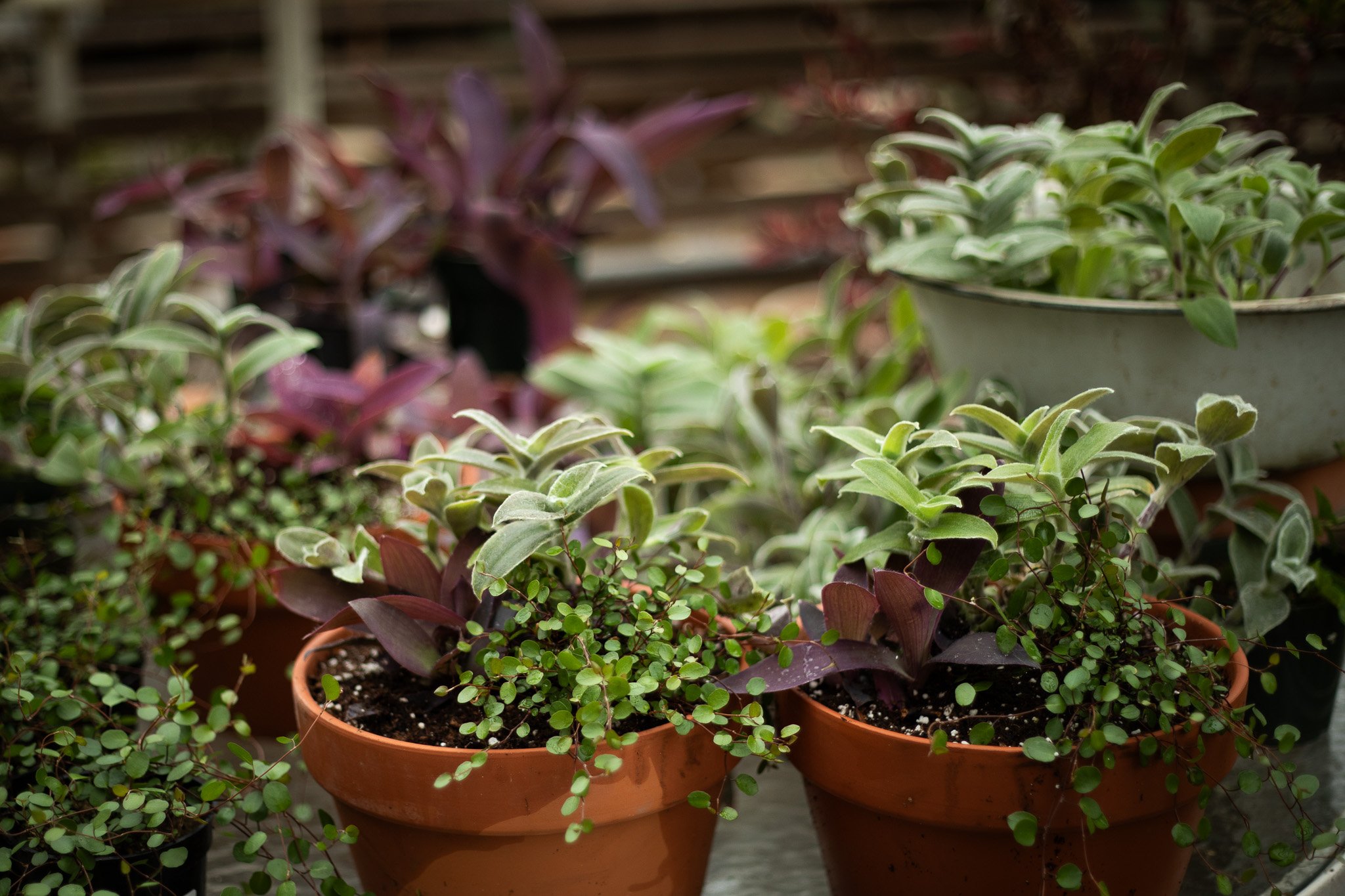
Two varieties of tradescantia potted up with wire vine