
Fiddle leaf fig - Ficus lyrata
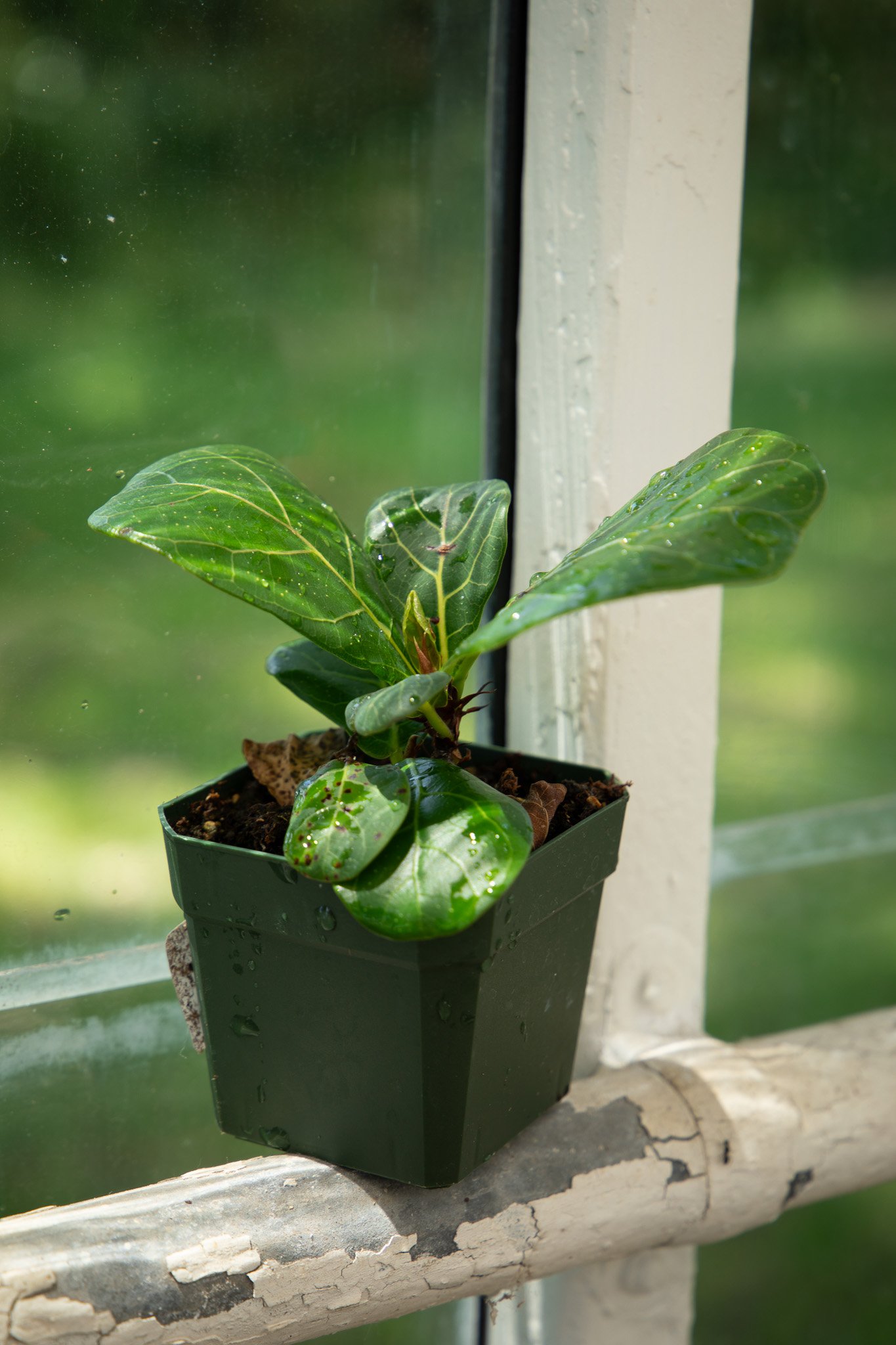
The case for starting small. Everyone wants a dramatic, floor-to-ceiling fiddle leaf fig, but actually, they are likely to do better if they get to grow into a space. So start with a small, healthy plant and let it thrive in your space.
Light
Bright, indirect light for most of the day, so near a south or west-facing window would be ideal. It can usually handle some gentle morning sun, but harsh afternoon sun may scorch the leaves. Once you find its happy spot, leave it there. Fiddle leaf figs do not love being shuffled around.
Water
Water thoroughly, then wait until the top 1–2 inches of soil are dry before watering again. The finger test is your friend here. Overwatering is the most common way these plants go sideways, so when in doubt, wait another day.
Soil
Use a well-draining potting mix that still holds some moisture, giving roots both air and drainage. Avoid a pot that's too large, as excess soil holds moisture, and roots can become waterlogged.
Pet Safety
Toxic to cats and dogs. Ingestion can cause irritation of the mouth and gastrointestinal tract, and contact with the sap may cause dermal irritation. Keep out of reach of curious pets.
Get Nerdy
You may have heard that fiddle leaf figs are drama queens — move them across the room and they'll drop half their leaves in protest. But there's actual biology behind that reputation.
When a fiddle leaf fig senses a sudden change like a new light angle, temperature shift, or a trip home from the greenhouse, it triggers a hormonal response. Ethylene, the plant hormone responsible for leaf drop, is released, and the plant responds to changing conditions by shedding leaves and conserving resources. It's not being difficult, it's just doing what its biology tells it to do.
The reason fiddle leaf figs are so sensitive about this is that they're native to lowland tropical rainforests in western Africa, where conditions are incredibly stable — consistent warmth, filtered light, high humidity year-round. They never really built up a tolerance for change. So when your thermostat kicks on in October, they notice.
The good news is that most plants refoliate within four to eight weeks once the stress is removed. Pick a good spot and commit to it. (And yes — this is exactly why starting with a small plant is the smarter move. A little one that grows up in your window never has to adjust to anything.)