Ceropegia sandersonii - Parachute plant
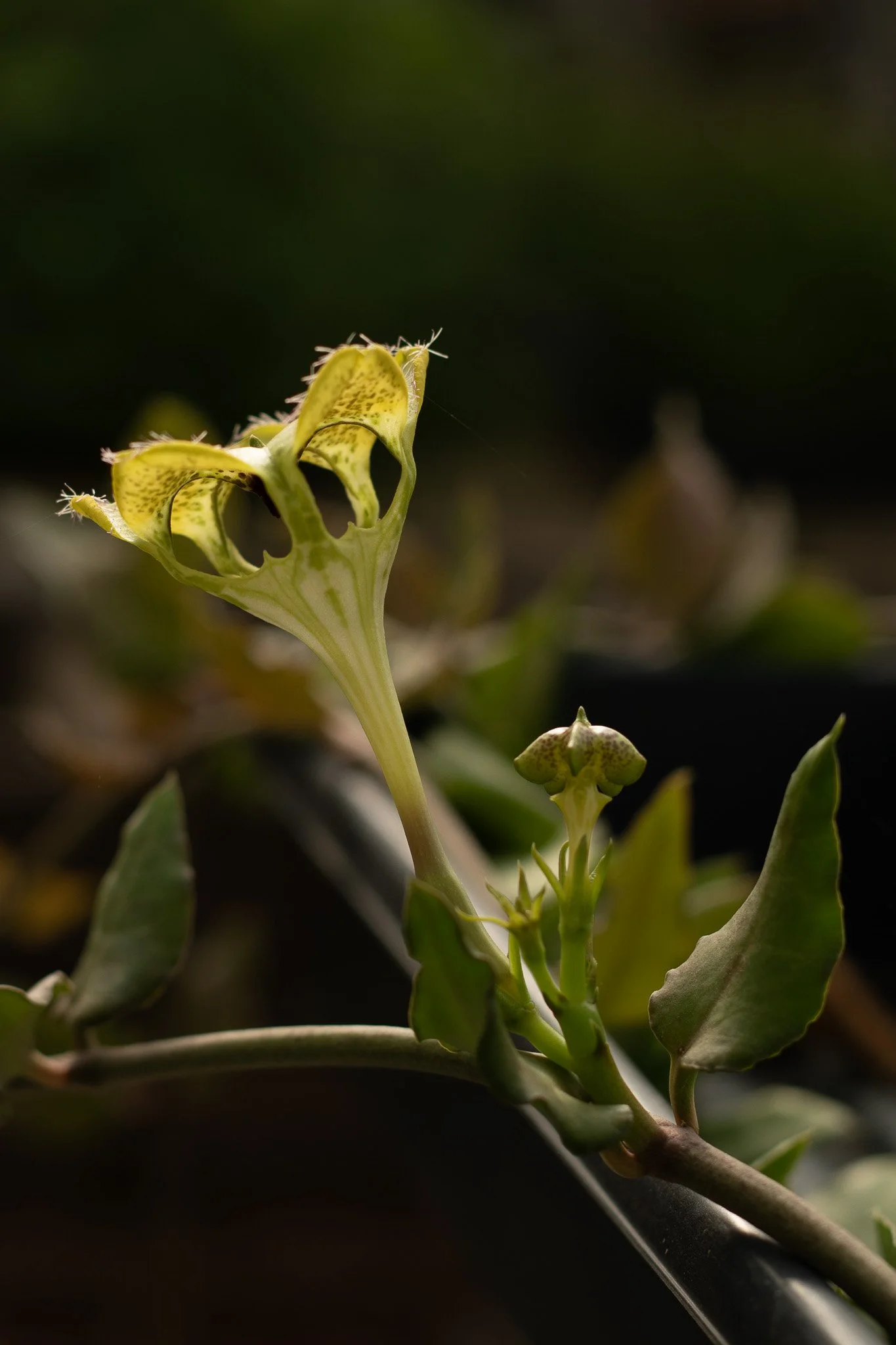
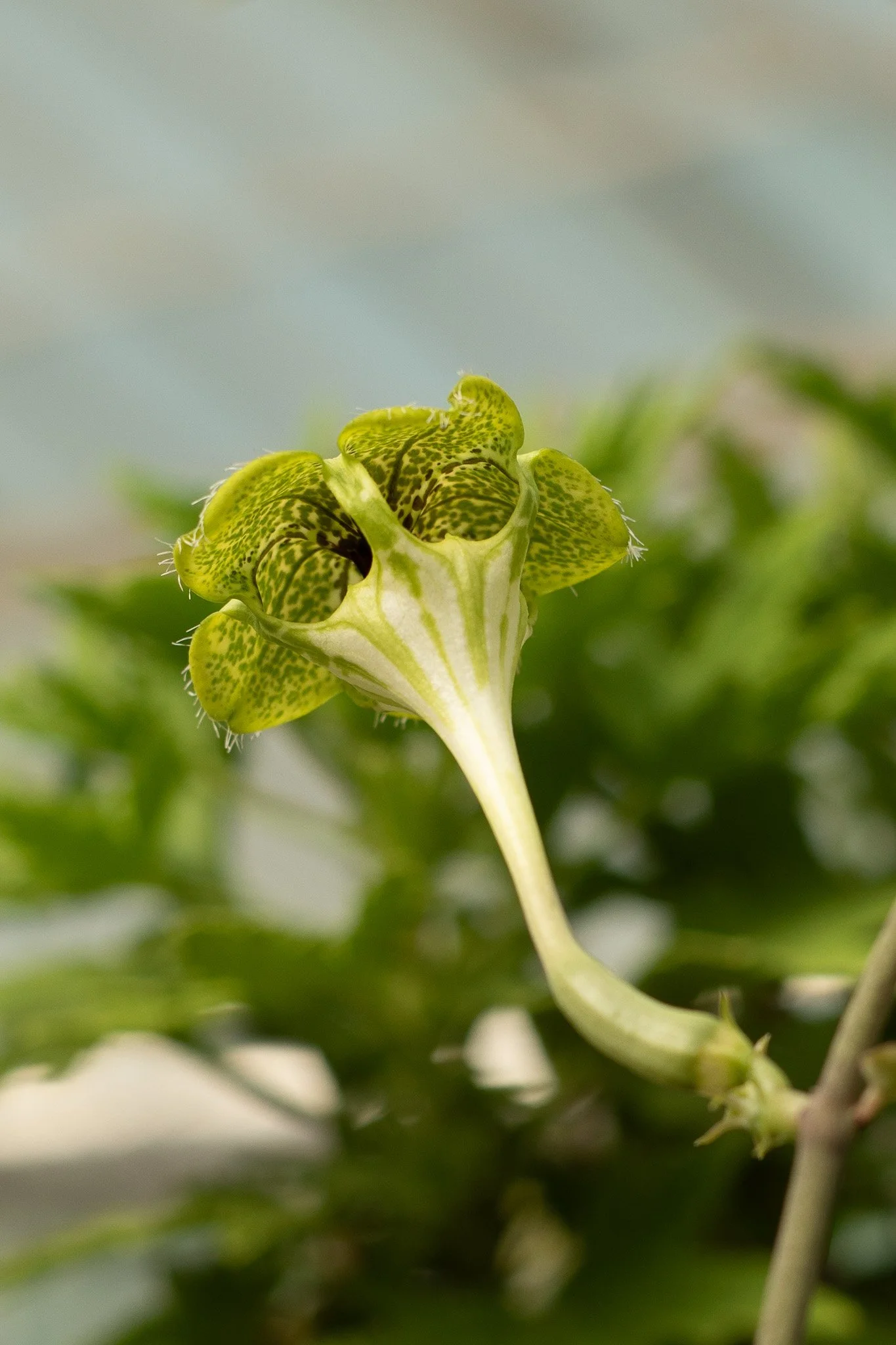
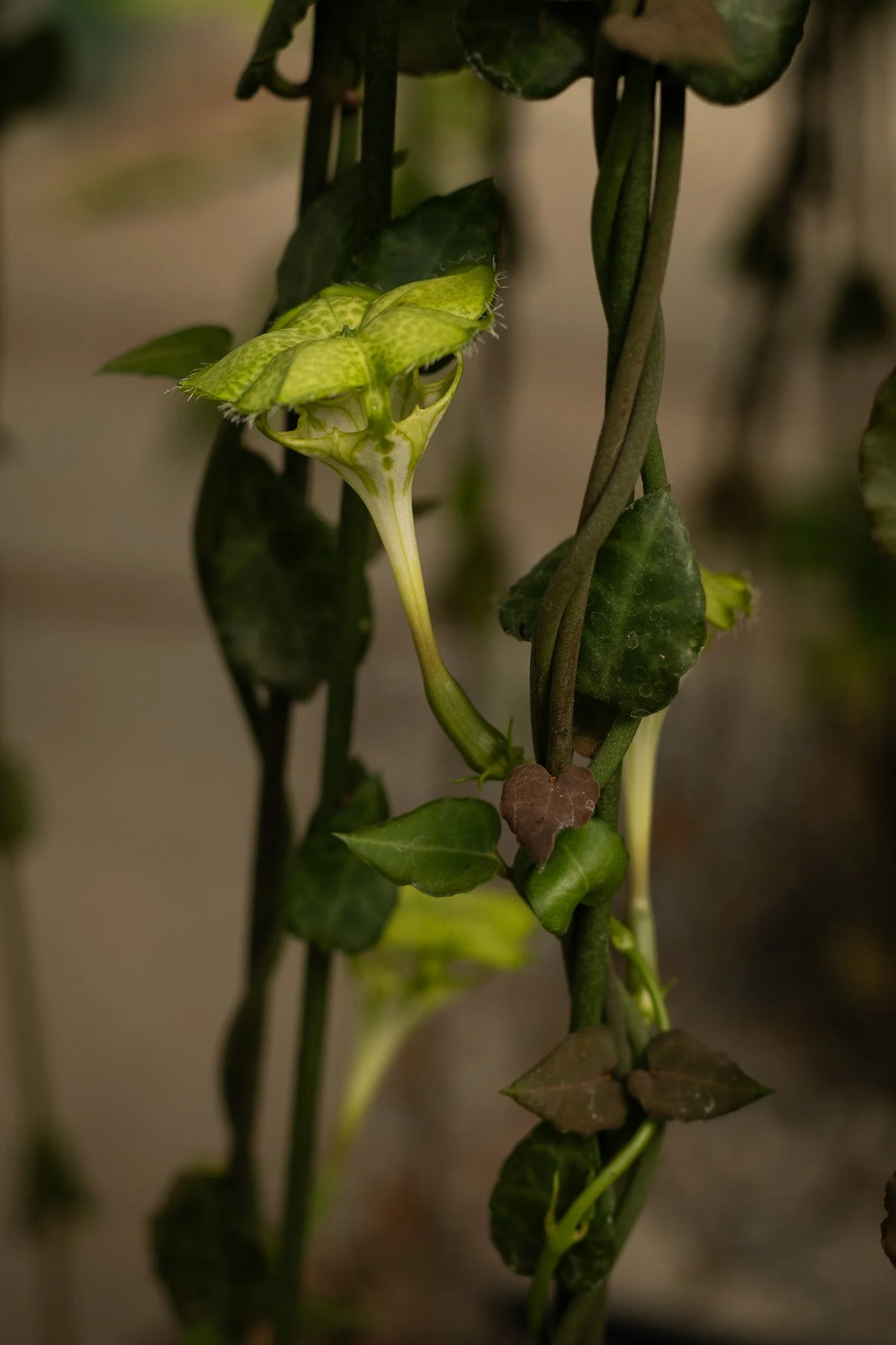
This plant's flowers look like something out of a science fiction movie. The pale green, cage-like, striped flowers look like a tiny parachute mid-descent. And that shape isn't just for show. It's built for a very specific purpose – luring in flies, trapping them inside for a day or two, and only letting them go once they're covered in pollen. This week's plant is proof that easy to grow and genuinely bizarre aren't mutually exclusive.
Light
Bright, indirect light. Near an east or west window. Direct sun scorches the leaves, but too little light means fewer of those signature parachute blooms.
Water
Let the top inch or two of soil dry out between waterings. This is a vine that stores water in its stems, so it's far more forgiving of neglect than of soggy soil. Root rot from overwatering is the most common way people lose this plant.
Soil
A well-draining mix is important. Regular potting soil with some extra perlite works well.
Pro tip
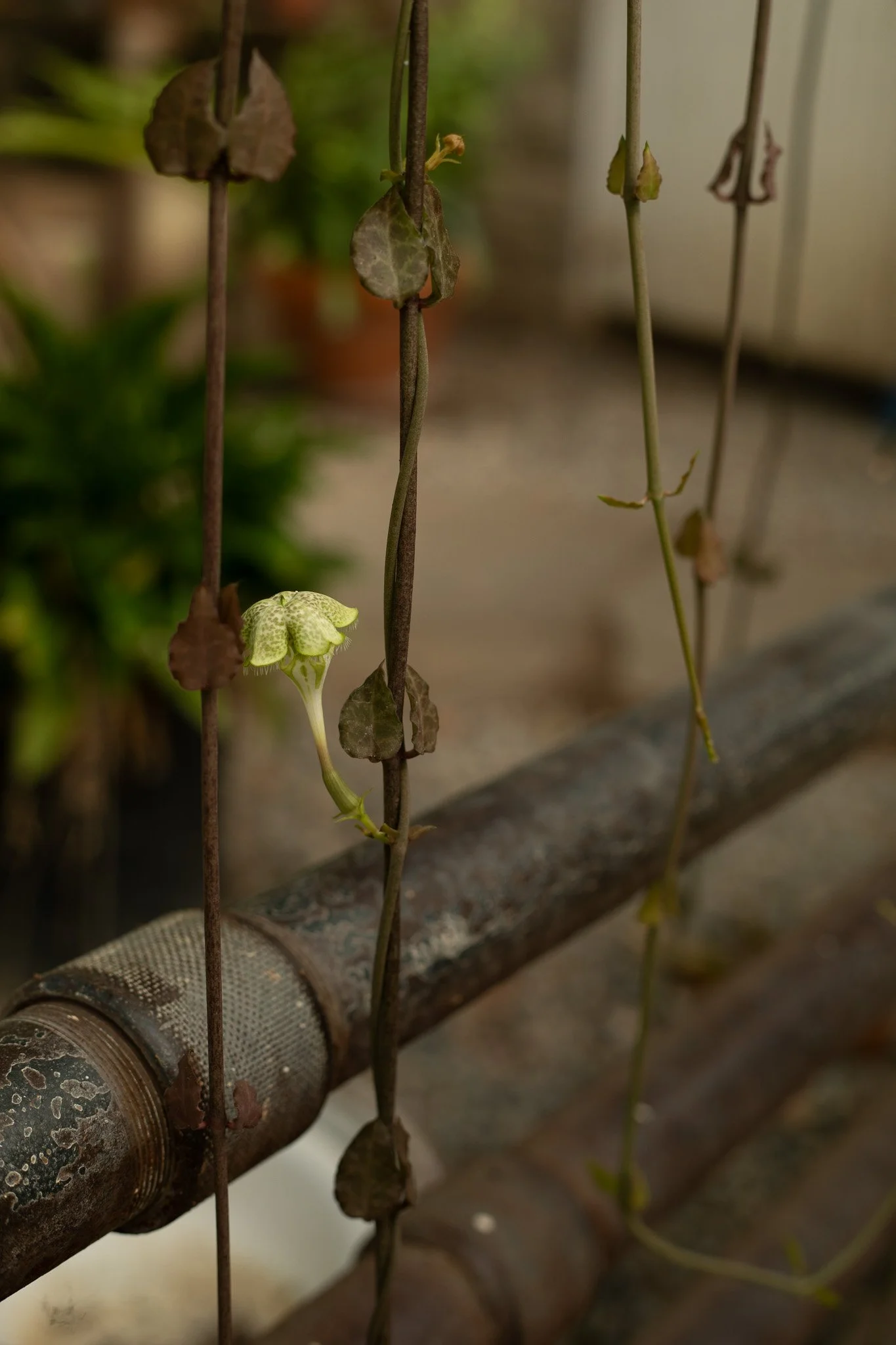
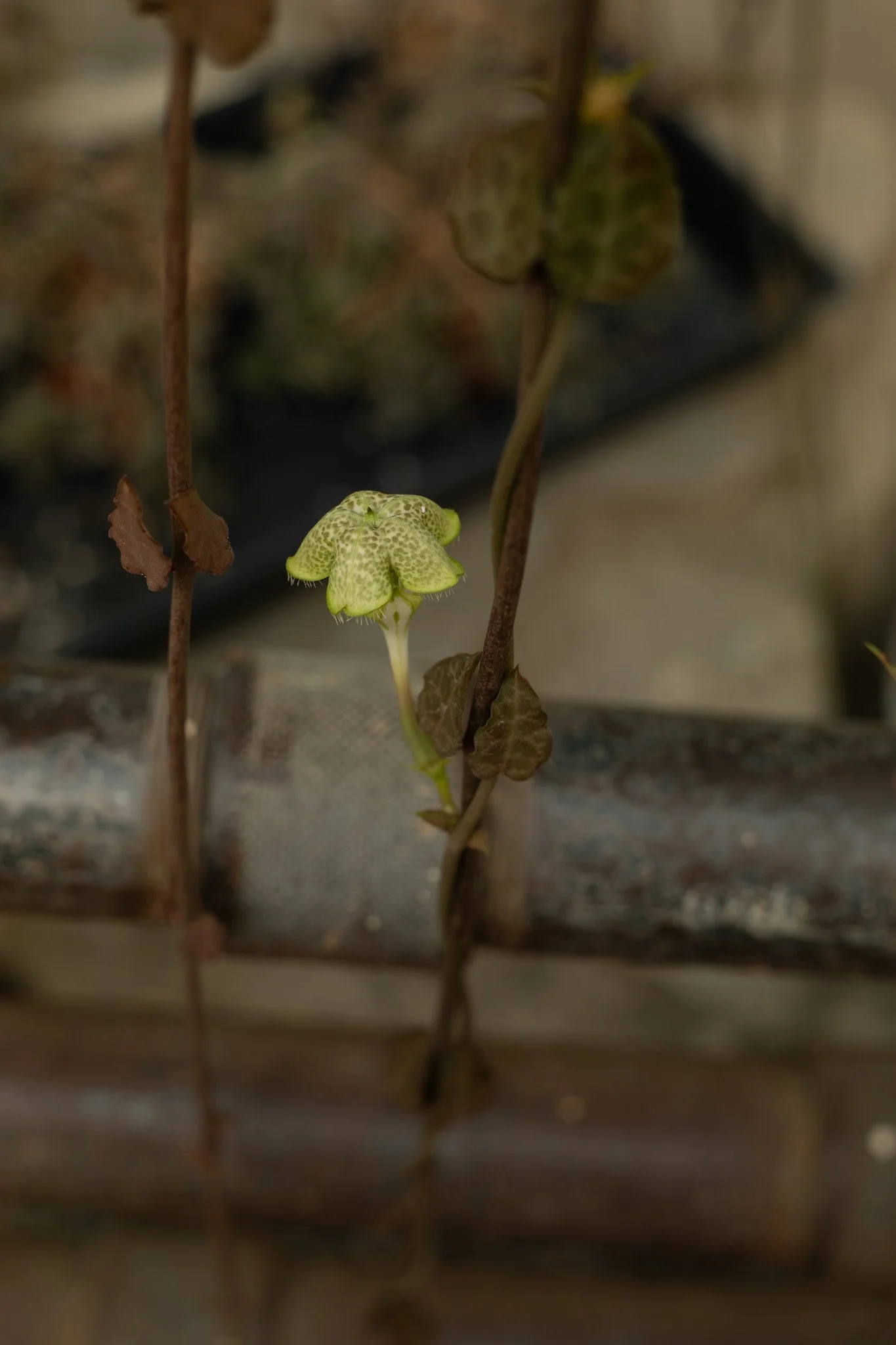
This is a climbing/trailing vine, so give it something to grab onto like a small trellis or moss pole, or let it cascade from a hanging basket.
Pet safety
Ceropegia sandersonii doesn't have its own listing in the ASPCA's toxic/non-toxic plant database, so I'd treat it with the same caution you'd give any unlisted houseplant.
Get Nerdy
Ceropegia sandersonii releases a scent that mimics the pheromones of a distressed bee, which happens to be exactly what a certain species of fly hunts for. The fly follows the scent in, and once inside, downward-pointing hairs lining the flower's tube make it easy to get in, but nearly impossible to get out. While the fly is trapped (not digested), it collects pollen, and after a day or two, the hairs wilt and go soft, allowing the fly out, only to get fooled by the next flower in bloom.
No digestion or carnivory, just an elaborate bait-and-switch built entirely around getting pollinated.