
Begonia meticulata (polka dot begonia)
Begonia maculata (Polka Dot Begonia / Angel Wing Begonia)
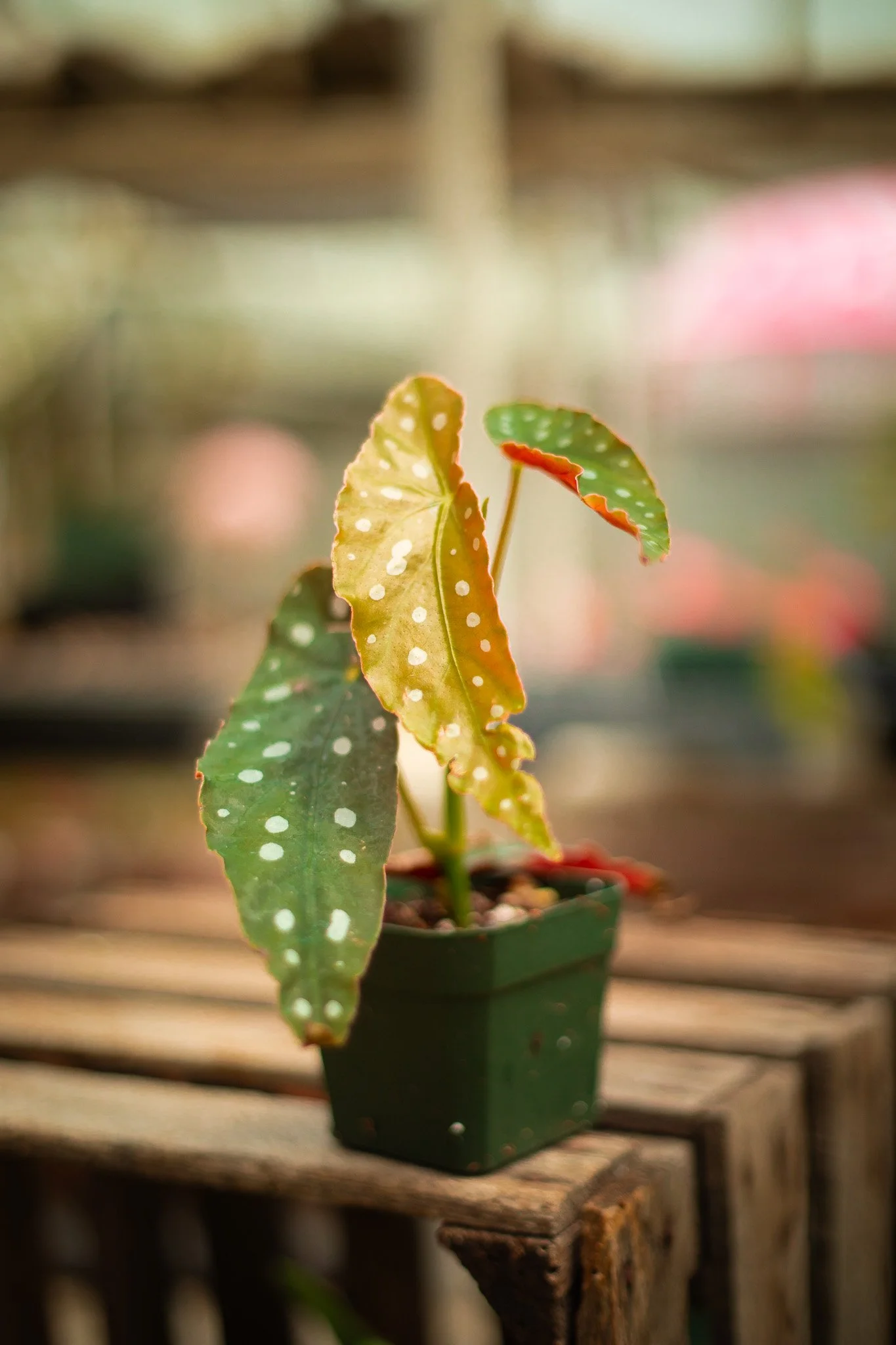
A pant that will stop you in your tracks! The silver-spotted leaves on deep olive green, with a flash of burgundy red on the underside, will make you swoon. The polka dot begonia is dramatic without being difficult, which is exactly the kind of energy we want in a houseplant.
Light
Bright, indirect light is the sweet spot. An east- or west-facing window is ideal, but a south-facing window can work well in winter when the sun angle is lower. Too much direct sun will fade or scorch those spectacular spots, while too little light can cause legginess.
Watering
This is where most people go wrong — in both directions. Begonia maculata thrives in consistently moist (not wet) soil. Let the top inch dry out before watering again, but don't let it dry out completely. It’s also a good idea to water at the base, as wet foliage can invite fungal issues. Because this plant likes humidity, a pebble tray with water, or a spot in a well-lit bathroom are great.
Soil and Containers
Use a standard potting mix amended with perlite (which holds moisture while draining well). Terracotta pots are helpful if you tend to overwater — plastic or glazed ceramic is fine if you're on the drier side.
Pro Tip
Begonia maculata is a cane-type begonia, meaning it grows on stems that can get tall and leggy over time. Pinching back the growing tips encourages bushier growth and more of those spectacular leaves. Don't compost those cuttings! They root easily in water and make excellent gifts (or trades).
Pet Safety
According to the ASPCA, Begonia maculata is toxic to cats and dogs.
Get Nerdy with Cara: Those dots are just a bunch of air
First of all, those dots aren't pigment at all. There's no white or silver coloring anywhere in that leaf. What you're actually seeing is air.
The spots are pockets of trapped air just beneath the leaf's upper layer, and because air reflects light differently than plant tissue does, your eye reads them as bright silver. So, it’s not color, it’s actually structural. Botanists call it blister variegation, and what plant enthusiast doesn’t like some fancy variegation?
What you want to know, of course, is why. There are two theories floating around, neither of which has been proved (sorry). The first is that the spots mimic butterfly eggs, making the leaf look like it has already been claimed, so butterflies move on to lay their eggs elsewhere. Another is that they mimic leaf miner damage, the scarring left behind by insects that tunnel through leaves to feed. In other words, the plant may have evolved to look already eaten as a way of convincing things not to eat it.
Neither hypothesis has been definitively confirmed, but both ideas are as cool as the polka dots are pretty.